
Dehydrated Vegetables vs Fresh Vegetables: Which Is Better for Food Manufacturing?
When food manufacturers select their raw materials, they primarily focus on critical factors such as cost, shelf life, and product consistency. For this reason, many buyers carefully evaluate dehydrated vegetables vs fresh vegetables before making a final procurement decision. While both options have their advantages, dehydrated vegetables often offer more practical benefits for large-scale production.
In this guide, we will compare these two options across several key dimensions. Furthermore, we will explain why dehydrated ingredients have become the industry standard for global food processing companies. Consequently, you will be able to determine which choice best suits your specific manufacturing needs.
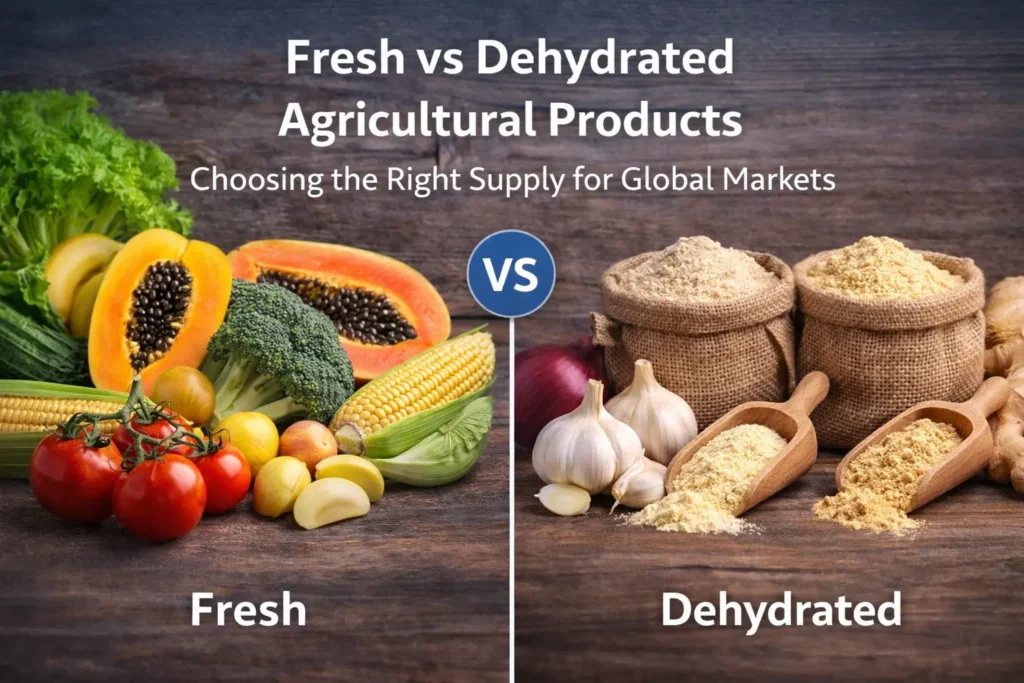
Shelf Life and Storage Comparison
Fresh vegetables contain high moisture levels and therefore spoil very quickly. Consequently, they require expensive cold storage and extremely fast transportation to maintain quality. In contrast, dehydrated vegetables have most of their moisture removed, which allows them to be stored for 12–24 months in a standard dry environment.
Specifically, using dehydrated ingredients provides the following storage advantages:
- Reduced Loss: Specifically, there is much less product spoilage over time.
- Better Planning: Furthermore, it allows for more accurate long-term inventory planning.
- Lower Risk: Consequently, there is a lower risk of unexpected supply shortages.
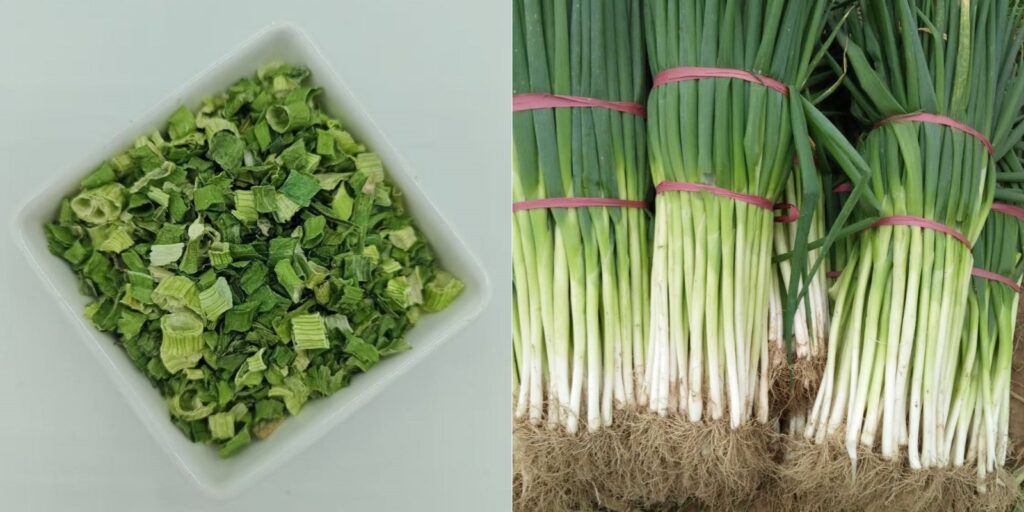
Transportation and Logistics Efficiency
Because fresh vegetables are heavy and temperature-sensitive, they often lead to much higher logistics costs. However, dehydrated vegetables are significantly lighter and do not require refrigerated shipping in most cases. Therefore, they are much more efficient for international trade and long-distance distribution.
Key logistics benefits include the following points:
- Cost Reduction: Specifically, you will see lower overall shipping expenses.
- Ease of Handling: Furthermore, the products are much easier to move within a warehouse.
- Simplicity: Consequently, the complexity of the global supply chain is greatly reduced.
Consistency in Quality Control
Fresh vegetables often vary significantly due to seasonal changes and weather conditions. This volatility may result in noticeable differences in taste, color, and texture. In contrast, dehydrated vegetables are processed under strictly controlled conditions, which ensures a more standardized output for your factory.
Specifically, industrial dehydrated vegetables provide:
- Visual Stability: Specifically, a very stable and predictable color profile.
- Uniformity: Furthermore, a consistent flavor that does not change between batches.
- Precision: Consequently, uniform particle sizes that are perfect for automated production.
Production Efficiency and Labor Savings
Fresh vegetables require extensive washing, cutting, and trimming, which naturally increases labor costs and organic waste. In contrast, dehydrated vegetables are ready to use immediately. In most cases, manufacturers only need to rehydrate them or add them directly to the production line. Therefore, they significantly increase total factory throughput.
Cost Control and Waste Reduction
Utilizing fresh vegetables often leads to higher waste due to natural spoilage and trimming during prep. Dehydrated vegetables, however, offer a much more controlled input because nearly 100% of the purchased material is usable. As a result, companies can achieve more predictable budgeting and better overall cost control.
Applications in Modern Food Manufacturing
Specifically, fresh vegetables are most suitable for:
- Freshly prepared restaurant dishes.
- Very short, local supply chains.
- Ready-to-eat salads and chilled snacks.
In contrast, dehydrated vegetables are widely used in:
- Instant Foods: Specifically for ramen and soup packets.
- Ready Meals: Furthermore for frozen and shelf-stable dinners.
- Seasonings: Consequently for bulk soup bases and dry rubs.
- Prepared Foods: Moreover for frozen dumplings and snack flavorings.
Which Option Is Better for Your Business?
There is no single answer for every situation. However, when shelf life, logistics, and consistency are your top priorities, dehydrated vegetables are usually the preferred choice. In summary, fresh vegetables are better for short-term local use, while dehydrated options are ideal for large-scale manufacturing.

Looking for a Reliable Dehydrated Vegetable Supplier?
At Yunnan Guoju Green Food Co., Ltd., we are committed to providing premium ingredients for the global market. Specifically, our high-quality product range includes:
- Dehydrated garlic, onion, and green onion flakes.
- Premium dehydrated carrot and mixed vegetable blends.
- Advanced freeze-dried fruits and vegetables.