
VF Snack Packaging and Shelf-Life Control
Vacuum Fried Chips Packaging: Why Vegetable Chips Lose Crispness
Vacuum-fried vegetable chips can leave production with a crisp bite and arrive noticeably softer. The cause is not always the frying process. Product condition at filling, moisture-barrier performance, seal integrity, temperature changes and warehouse exposure can all affect the result.
This guide explains how importers, snack brands and repackers can evaluate vacuum fried chips packaging without relying on vague promises about shelf life.
Request Packaging ReviewRequest VF Samples
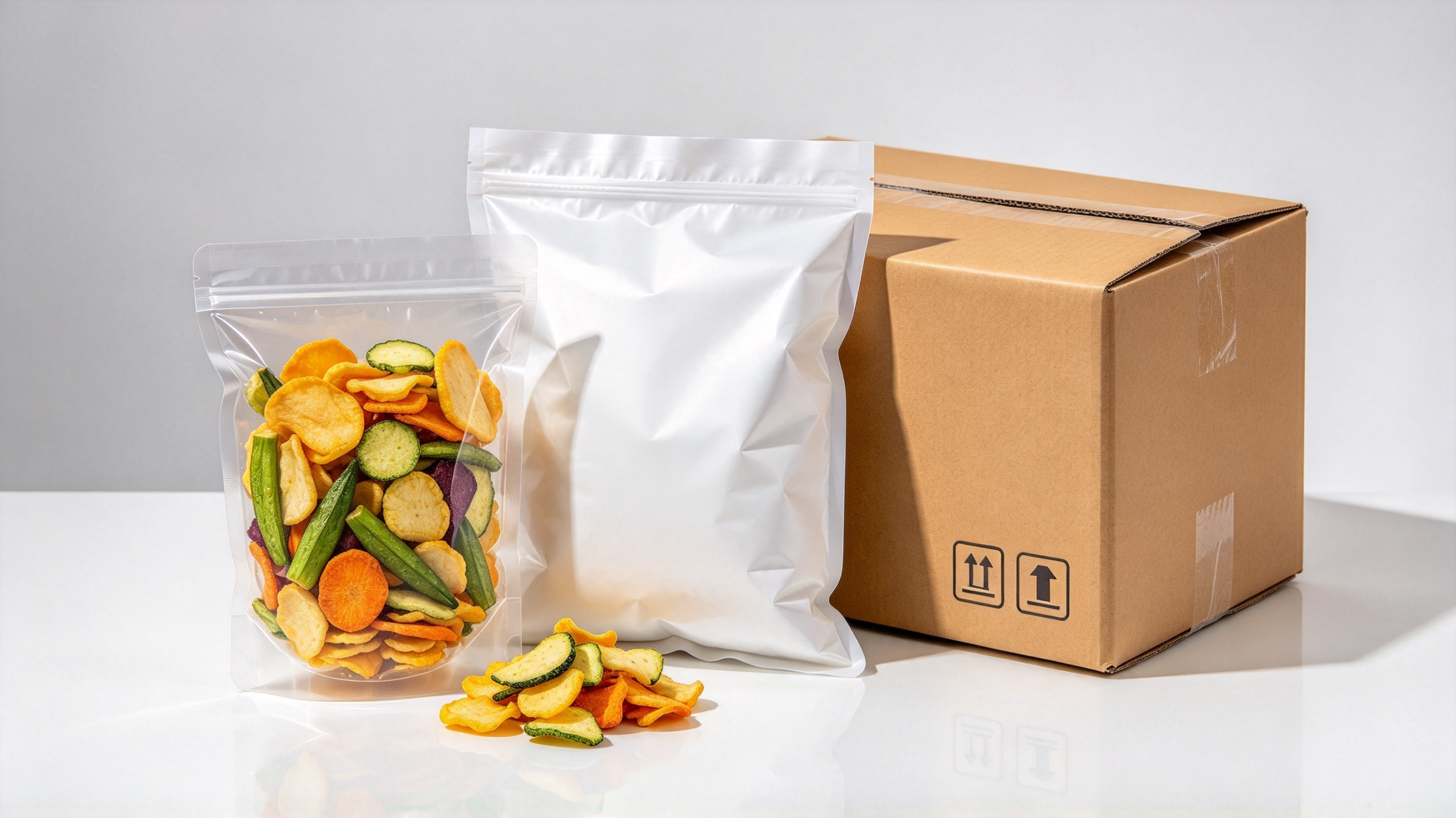
Crispness Loss Is Usually a System Problem
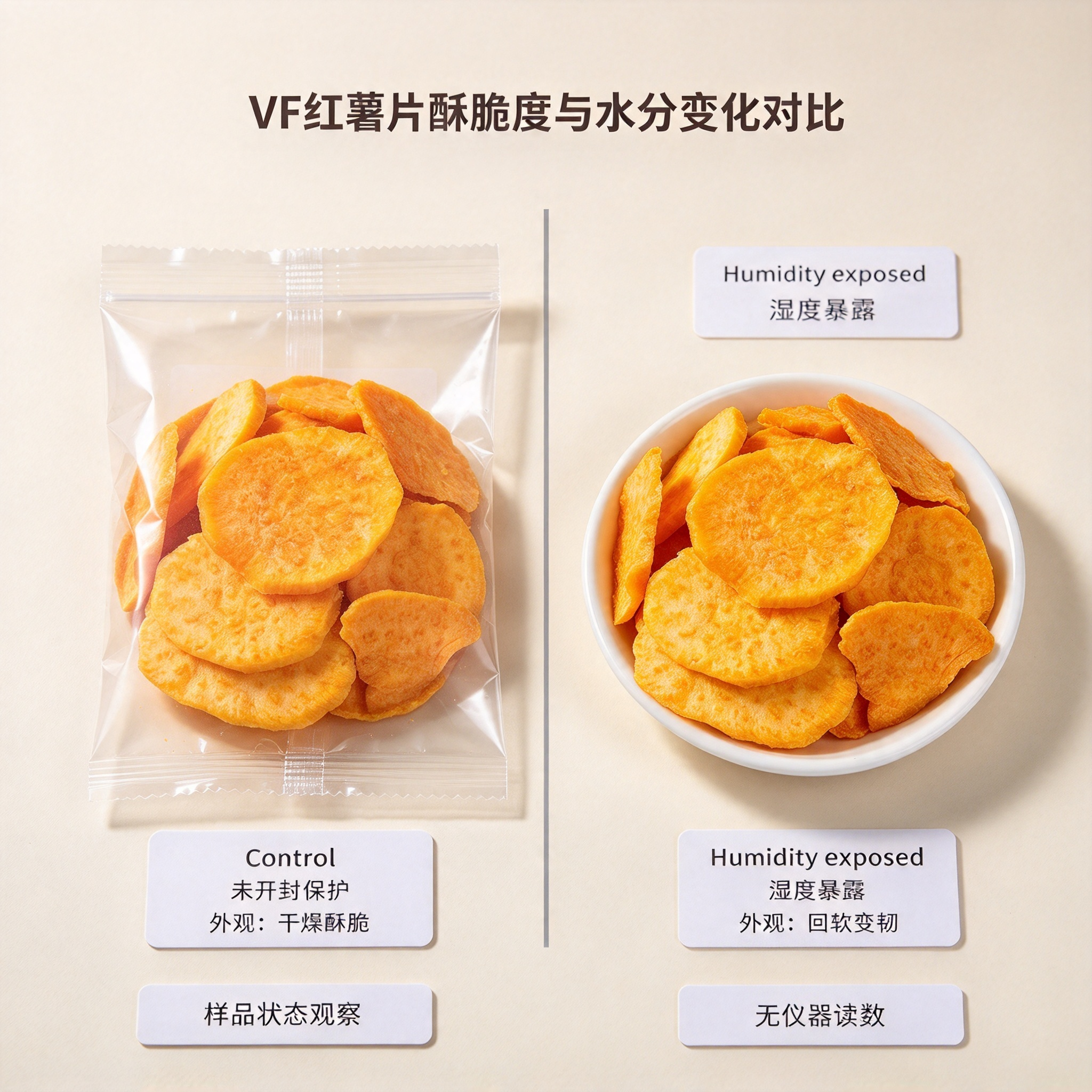
A crisp structure becomes softer when it absorbs moisture. That moisture may enter through the packaging material, a weak seal, a puncture or repeated opening. It may also come from condensation if warm product is sealed before it has cooled under controlled conditions.
For this reason, a packaging complaint should not begin with the pouch alone. Buyers should review the condition of the product before filling, the package barrier and seal, the route to market and the way the pack is stored after arrival.
Vacuum Fried Chips Packaging: Four Control Points
On mobile, scroll the table horizontally.
| Control point | What buyers should confirm | Typical warning signs | Useful evidence |
|---|---|---|---|
| Product before filling | Cooling practice, crispness at packing, handling time and the quality parameter used for release. | Soft pieces in a newly opened pack or moisture droplets inside the pouch. | Production record, retained sample and measured moisture or water activity when available. |
| Primary package | Film structure, moisture and oxygen barrier data, light protection, grease resistance and food-contact suitability. | Gradual softening, oxidation notes, color fading or oily staining. | Converter specification, declaration of compliance and trial-pouch results. |
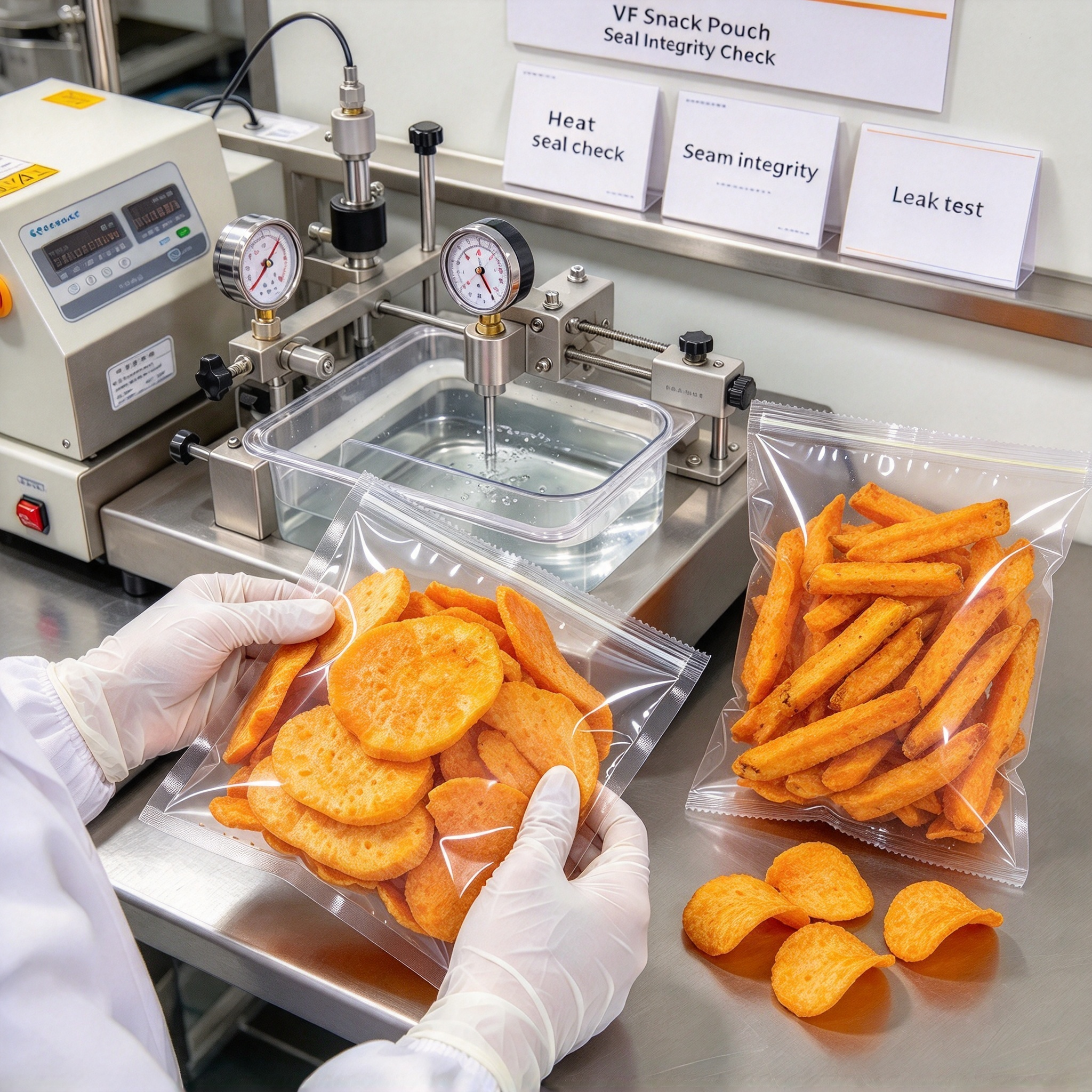
| Seal and headspace | Seal width and continuity, contamination in the seal area, closure method and any gas-flush option used for the project. | Localized leaks, weak seams, swelling, loss of vacuum appearance or inconsistent packs. | Seal inspection, leak test and samples from different points in the packing run. |
| Storage and distribution | Temperature and humidity exposure, sunlight, carton compression, transit time and local repacking conditions. | Good origin samples but soft destination samples; more breakage in lower cartons. | Shipment logger when justified, warehouse records, arrival photos and unopened control packs. |
Moisture Content and Water Activity Are Not the Same Question
Moisture content describes how much water is present. Water activity describes how available that water is within the food system. Both can support quality discussions, but one value should not be substituted for the other without an agreed method and purpose.
Ask the supplier which parameter is controlled, which test method is used and whether the result belongs to the finished product at packing or to a later shelf-life checkpoint. Avoid copying a limit from a different vegetable, cut or seasoning system.
The most useful acceptance plan connects an objective test with a sensory reference: agreed crunch, absence of leathery pieces and an unopened reference sample kept under defined conditions.
How to Review Packaging Material Without Guessing
There is no single film structure that is automatically correct for every VF product, pack size and market. A retail pouch, foodservice bag and bulk liner face different opening cycles, shelf display and handling risks. Ask the packaging converter or supplier for project-specific information rather than selecting a laminate by appearance alone.
Barrier Data
Request water-vapor and oxygen transmission information with the stated test conditions. Compare materials only when the units and test conditions are clear.
Sealability
Confirm the intended sealing equipment, seal window, pouch thickness and whether oil, seasoning dust or product fragments can contaminate the seal area.
Light and Grease Protection
Evaluate whether the product needs an opaque or metallized barrier and whether the inner layer is suitable for direct contact with an oil-containing snack.
Final-Pack Validation
Approve shelf life using the actual product, actual package, actual filling method and a distribution-relevant storage trial. Film data alone does not establish finished-product shelf life.
Cooling, Sealing and Headspace Controls
Product should reach the packing step under controlled conditions. Sealing warm product can create internal condensation as the pack cools. Excessive waiting in an open room, however, can allow a dry product to pick up moisture before it reaches the pouch. The supplier should define the transfer and filling process for the actual line.
Nitrogen flushing, desiccants or oxygen absorbers may be considered for some projects, but they are not interchangeable. Their suitability depends on the product, package volume, local rules, label requirements and safety assessment. Ask what the factory can actually run and validate the option in the final pack.
Bulk Export Packs and Retail Pouches Need Different Checks
Bulk Pack for Importers and Repackers
Confirm liner closure, carton fit, net weight, headspace and protection against puncture or crushing. The repacking room then becomes part of the moisture-control system, so exposure time and resealing must be managed.
Finished Retail Pack
Confirm film, zipper or closure, fill weight, seal area, pack dimensions and carton arrangement. Test consumer opening and reclosing when the pack is intended for more than one serving.
For either format, do not treat breakage and crispness as separate from packaging. A very tight pack may restrict movement but crush irregular vegetable pieces; too much unprotected headspace may increase movement during transport.
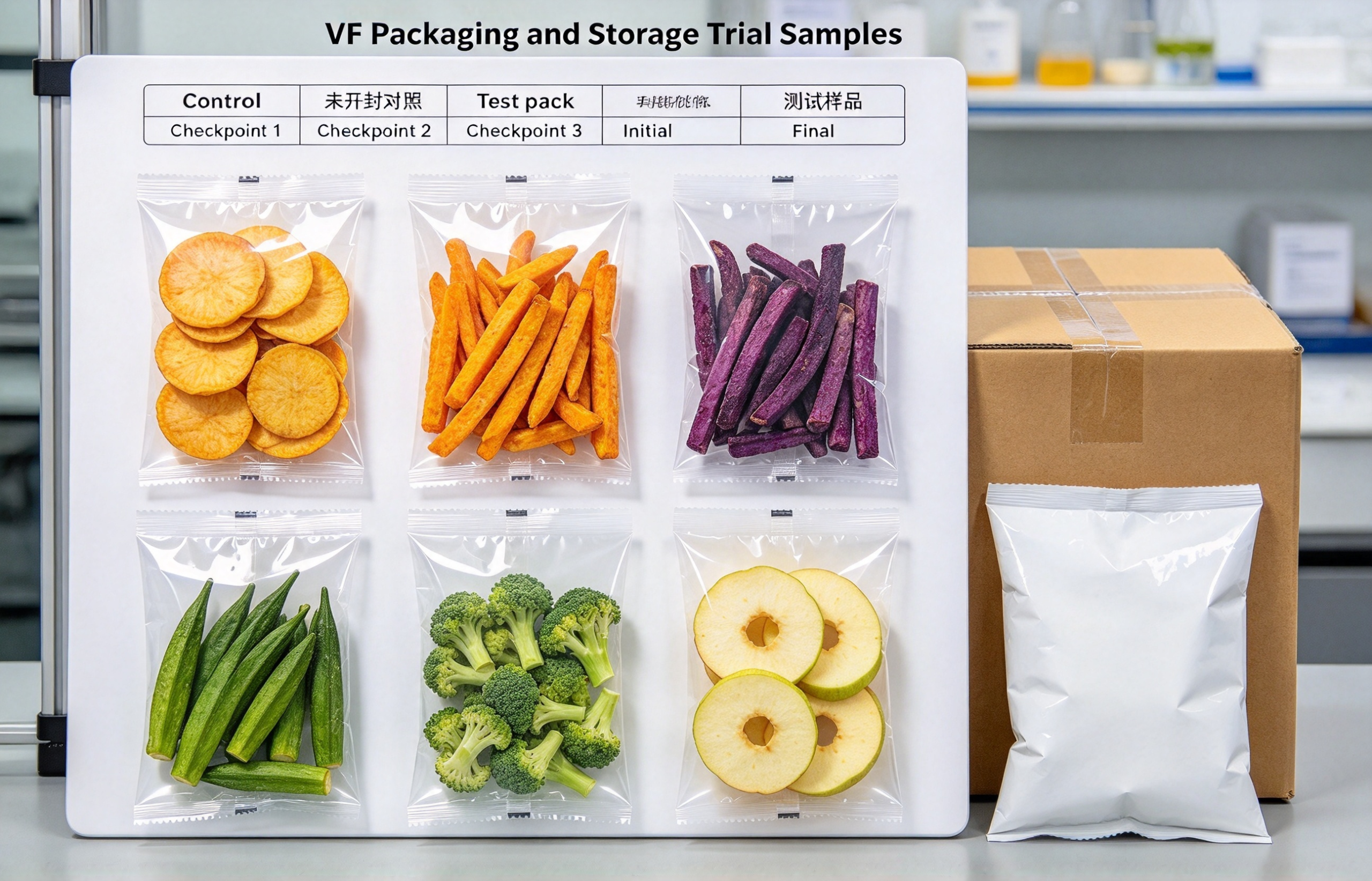
A Practical Packaging and Storage Trial
- Approve the starting product. Record sample code, production date, product form, seasoning, initial sensory result and relevant measured values.
- Define the pack variants. Change one meaningful variable at a time, such as film, sealing condition or secondary carton.
- Keep unopened controls. Use enough packs for every checkpoint so one pouch is not repeatedly opened and resealed.
- Set realistic storage conditions. Include normal storage and, where appropriate, a justified accelerated or transport simulation designed by qualified staff.
- Inspect the seal and package. Record leaks, delamination, punctures, staining, swelling, zipper performance and carton damage.
- Evaluate product condition. Check crunch, hard or leathery pieces, aroma, rancid notes, color, surface oil and broken pieces using the same method each time.
- Document the decision. State which product-pack combination passed, the trial conditions and which parameters must be repeated in commercial production.
What to Send When Requesting a Packaging Quote
Product and Market
- VF product and seasoning
- Destination country
- Retail, foodservice or repacking use
- Expected distribution and storage route
Pack Requirement
- Target net weight and pouch dimensions
- Bulk liner or printed retail pouch
- Required closure and display format
- Artwork and label responsibility
Quality Objective
- Desired shelf-life study period
- Crispness and defect references
- Required test reports
- Acceptable breakage approach
Commercial Information
- Trial quantity and forecast volume
- Incoterm and destination port
- Carton or pallet restrictions
- Requested sample and approval schedule
Related GuojuFoods Resources
For product selection and project setup, review our vacuum-fried vegetable snacks sourcing guide, custom VF vegetable mix guide and vacuum-fried broccoli product page. You can also browse all products before sending a packing brief.
Vacuum Fried Chips Packaging FAQs
Why do vacuum-fried chips become soft in a sealed pouch?
Possible causes include unsuitable moisture-barrier performance, a weak or contaminated seal, a puncture, condensation, moisture pickup before filling or an out-of-condition starting product. Review the product, package and distribution record together.
Does a thicker pouch always protect crispness better?
No. Thickness alone does not define moisture or oxygen barrier, seal performance or fitness for the filling line. Compare the complete material specification and validate it with the actual packed product.
Should buyers request moisture content or water activity?
Ask what the supplier controls and why. The two measurements answer different questions, so the agreed parameter, test method and sampling point should be stated in the specification.
Is nitrogen flushing required for every VF snack?
Not automatically. It is a project option that should be assessed with the product, package, headspace, oxidation risk, equipment capability and destination requirements.
Can one packaging trial support every VF vegetable?
No. Shape, surface area, oil content, seasoning, pack density and breakage behavior vary by product. Validate the selected package with the exact commercial product or representative range.
How should an importer investigate soft product after arrival?
Keep affected and unaffected packs, record carton position and storage conditions, photograph seals and damage, compare retained samples and share batch and shipment details before opening every pack.
Can GuojuFoods provide a guaranteed shelf life before testing?
A responsible shelf-life decision requires the final product, package, sealing process and intended storage conditions. Send your market and pack brief so the appropriate validation route can be discussed.
Technical References
Packaging principles in this guide are supported by a peer-reviewed review of fried snack packaging, FAO guidance on snack-food packaging barriers and research linking moisture to the quality of vacuum-fried fruit chips. Final specifications and shelf-life claims should be validated for the actual product and pack.
Discuss Your VF Packaging Requirement
Send the product, destination market, pack format, net weight, expected storage route and requested trial documents. We will use that information to organize a more relevant sample and quotation discussion.