
VF Snack Sample Approval and Quality Review
How to Evaluate Seasoning Adhesion on Vacuum-Fried Vegetable Chips
A seasoned vacuum-fried vegetable sample may look acceptable when it leaves the coating step but show bare pieces, flavor variation or loose powder after packing and transport. Buyers therefore need to evaluate both initial pickup and later retention.
This guide explains how importers, snack brands and distributors can review seasoning adhesion on chips without relying only on a quick taste test.
Request Seasoned SamplesDiscuss a Flavor Requirement
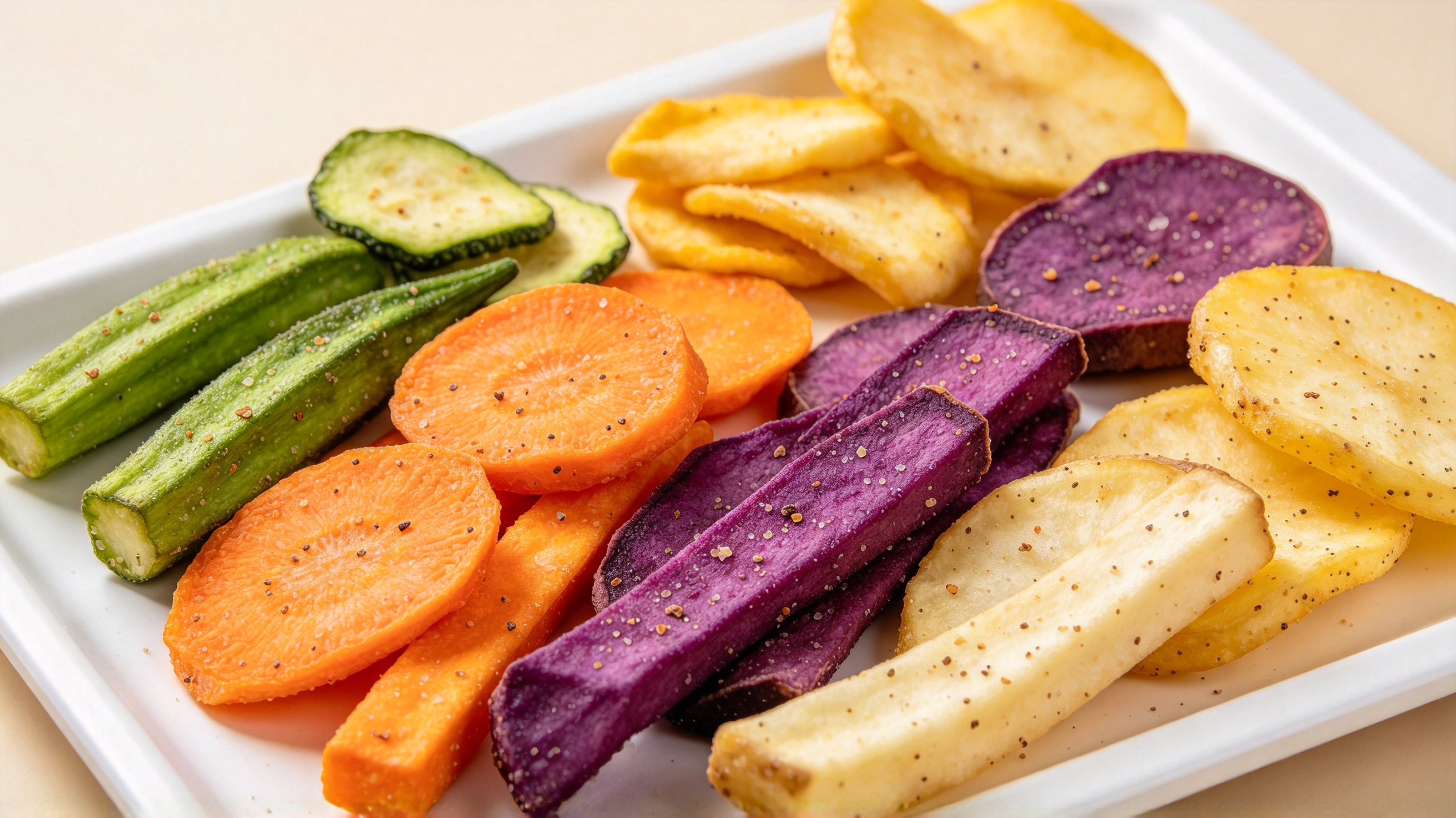
Why Seasoning Adhesion on Chips Matters to Buyers
Seasoning that does not remain on the product creates more than a visual problem. A pack may contain heavily coated pieces, nearly bare pieces and loose flavor powder at the bottom. Consumers then receive an inconsistent taste even when the average seasoning addition appears acceptable.
Loose powder can also affect pack appearance, opening experience and usable seasoning yield. For private-label projects, the issue may become a complaint about flavor strength when the real problem is uneven distribution or poor retention during handling.
Common Signs of Weak or Uneven Adhesion
| Observed condition | What it may indicate | What the buyer should check |
|---|---|---|
| Powder collected at the bottom of the pouch | Weak retention, excess fine powder or abrasion during transport. | Compare a newly packed control sample with a handled or transport-tested pack. |
| Bare areas on individual pieces | Uneven contact between the vegetable surface and seasoning. | Inspect pieces from the top, middle and bottom of more than one pack. |
| Dark or heavily coated patches | Localized seasoning buildup or uneven surface oil distribution. | Check whether the patches repeat across the batch and whether they affect taste or oil feel. |
| Clumps of seasoning | Powder agglomeration, concentrated wet spots or moisture pickup. | Review both the loose seasoning and the finished sample for lumps and patchy coverage. |
| Flavor differs from piece to piece | Coverage variation that may not be obvious from appearance alone. | Use a coded sensory comparison with several pieces from different packs. |
| Seasoning looks acceptable before shipping but not after arrival | Mechanical handling may be removing loosely attached powder. | Record carton position, breakage, pouch condition and loose powder after a defined handling trial. |
The Vegetable Surface Changes the Result
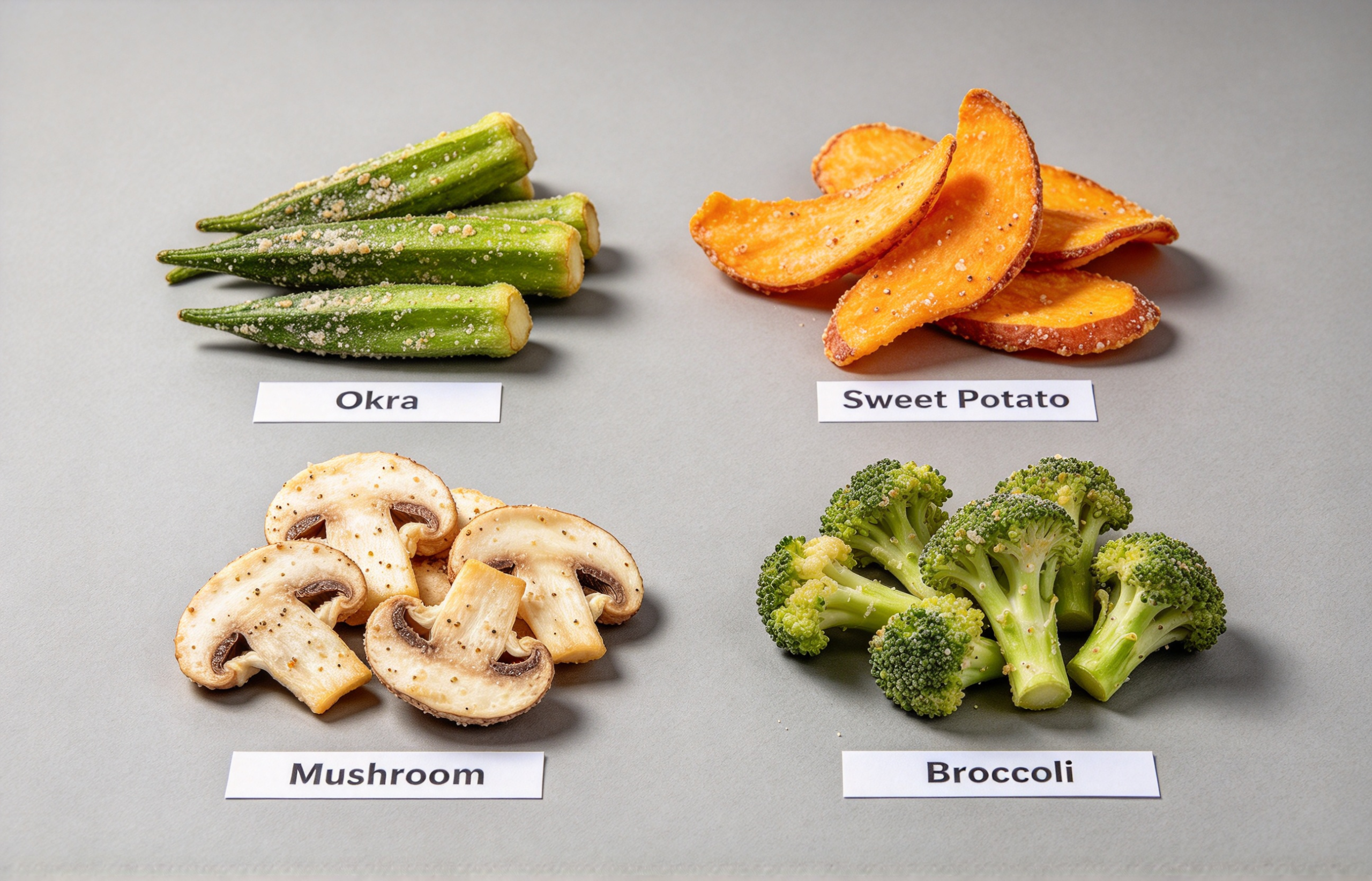
VF products do not present one standard surface. A smooth sweet potato strip, ridged mushroom piece, hollow okra pod and irregular broccoli floret expose seasoning differently. Surface area, shape, porosity and fragility all influence where powder collects and how easily it is removed.
For that reason, approval of one seasoned vegetable does not automatically approve another. A mixed VF pack also deserves separate review because small pieces and powder can settle while larger or more fragile components remain near the top.
Buyers should evaluate the exact commercial product form, not only a generic seasoning blend.
Oil Feel, Powder Size and Flavor Uniformity
Surface Oil Distribution
A thin and reasonably even surface layer can support powder pickup. Localized oily areas may instead create dark patches, clumps or a greasy mouthfeel. GuojuFoods’ current VF supply uses palm oil; the final ingredient declaration should follow the confirmed product specification.
Seasoning Particle Profile
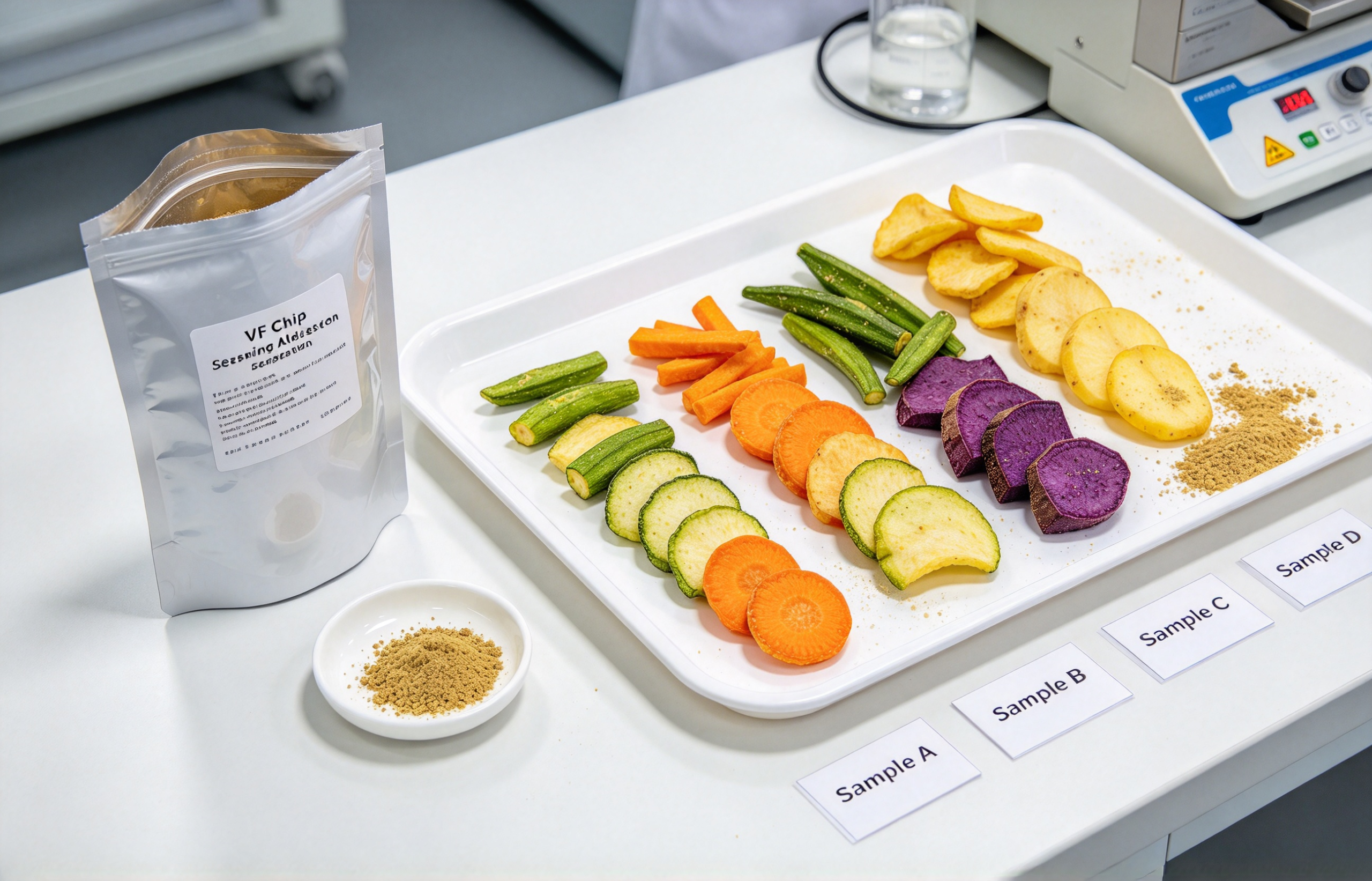
Very coarse particles may detach more easily from smooth surfaces, while excessive fines may create dust or collect in the pouch. The seasoning must be tested with the actual VF shape and flavor formula.
Product Temperature and Timing
Snack-industry references show that product temperature and the timing of seasoning application can affect adhesion. Buyers should ask the factory to confirm its actual process rather than prescribe an unverified temperature.
Mechanical Handling
Conveying, weighing, pouch filling, carton movement and distribution vibration can remove loosely held powder. Finished-pack evaluation is therefore more useful than inspection immediately after seasoning.
A Practical Sample Test for Seasoning Adhesion on Chips
- Identify every sample. Record product, flavor, sample code, production date and packing date.
- Inspect the unopened pouch. Photograph powder accumulation, broken pieces and visible coating differences before opening.
- Pour the sample onto a clean tray. Keep any material remaining in the bag so it can be reviewed separately.
- Check several locations. Compare pieces taken from the top, middle and bottom of the pouch.
- Review coverage. Note bare areas, heavy patches, clumps and whether the result changes with product shape.
- Evaluate flavor and oil feel. Use several assessors where practical and compare against an approved reference sample.
- Run a repeatable handling trial. Use the same pouch size, fill weight, carton arrangement and handling procedure for every candidate.
- Reinspect after handling. Compare coating appearance, pouch-bottom powder, flavor uniformity and breakage with the control.
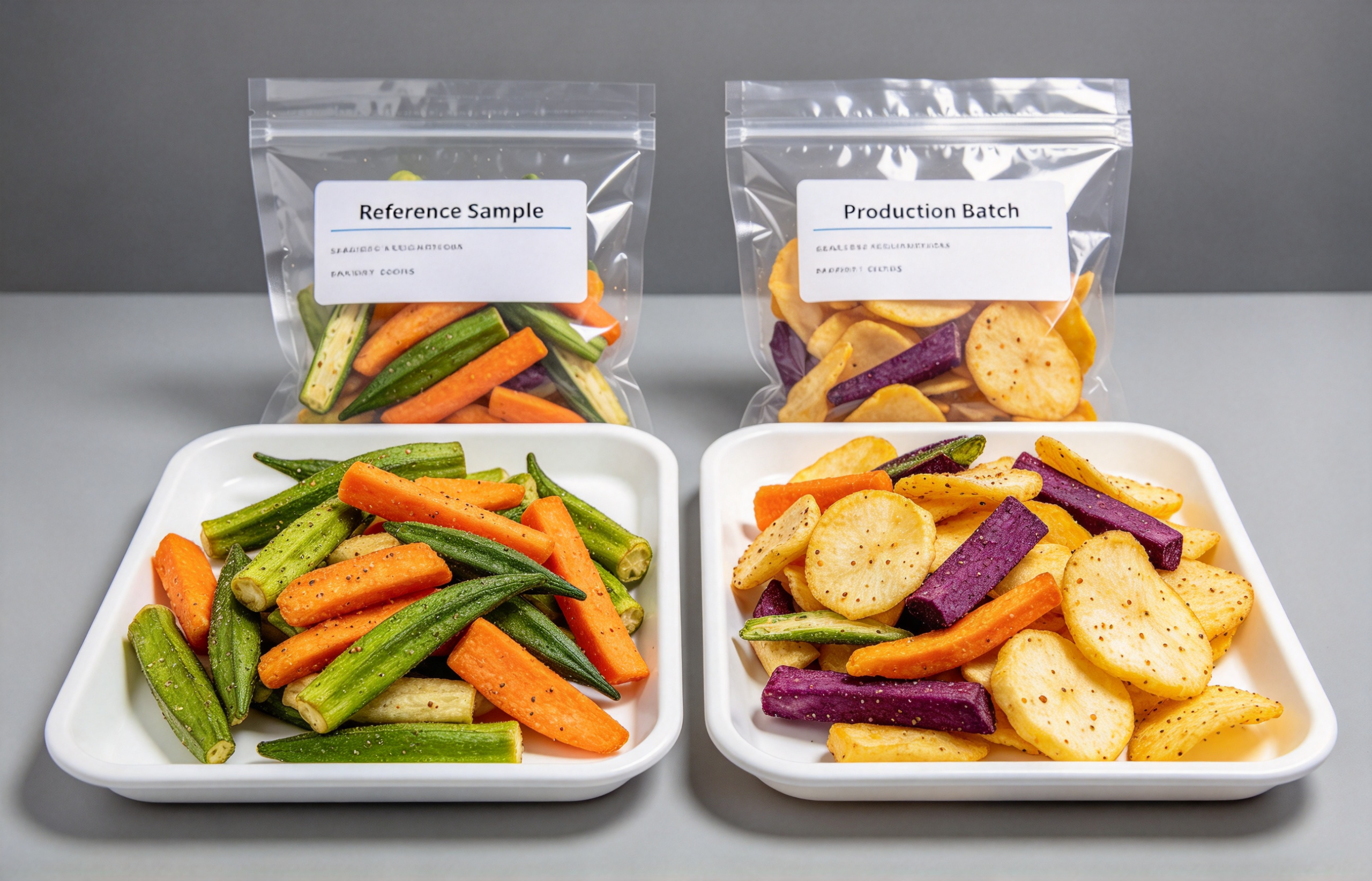
- Keep an approved reference. Store a sealed retained sample under defined conditions for commercial batch comparison.
How to Compare Original and Seasoned Samples
An original-flavor sample helps buyers distinguish the natural vegetable profile and surface condition from changes introduced by the seasoning. It also makes excessive oil feel, masked defects or uneven flavor easier to discuss.
| Review item | Original sample | Seasoned sample | Approval question |
|---|---|---|---|
| Appearance | Natural color, shape and surface condition. | Coverage, color change, clumps and bare areas. | Does seasoning improve the product without hiding unacceptable defects? |
| Aroma | Characteristic vegetable and frying aroma. | Target flavor aroma and any imbalance. | Is the flavor clear without an unexpected stale or heavy oil note? |
| Taste | Natural sweetness, savoriness or bitterness. | Salt, spice, sweetness and flavor intensity. | Is the taste consistent across several pieces? |
| Texture | Baseline crispness and breakage. | Any perceived softening, powdery feel or heavy coating. | Does the seasoning system preserve the intended eating quality? |
| Pack condition | Crumbs and natural fines. | Additional loose seasoning and colored dust. | Is the pouch-bottom material acceptable after the agreed handling trial? |
Set an Approval Standard Before the Order
Descriptions such as “evenly seasoned” or “not too oily” are useful starting points but weak purchase specifications. The buyer and supplier should agree on a practical reference before commercial production.
Reference Sample
Approve and identify the selected flavor sample. Record the product form, seasoning direction and pack format so later batches are compared on the same basis.
Defect Language
Define what is meant by bare pieces, heavy patches, seasoning clumps, excessive loose powder and greasy appearance. Photographs can reduce ambiguity.
Testing Method
State how packs will be selected, handled, opened and evaluated. Do not introduce a numeric limit unless both parties can measure it consistently.
Commercial Pack
Repeat the review with the intended pouch, fill weight and carton arrangement. A small laboratory bag may not reproduce movement in the commercial pack.
Information to Send for a Seasoned VF Quote
Product
- Vegetable or proposed mix
- Whole, slice, strip or other form
- Original or seasoned sample needed
- Reference product or flavor benchmark
Flavor Brief
- Flavor direction
- Target salt, sweetness or heat direction
- Ingredients to avoid
- Destination-market label requirements
Packaging
- Bulk or retail format
- Target net weight
- Printed pouch or plain inner bag
- Expected distribution route
Commercial Requirement
- Trial quantity and forecast volume
- Destination country and port
- Required specification and documents
- Target sample and order schedule
MOQ, lead time, flavor feasibility and available documentation should be confirmed for the selected product and pack. They should not be assumed from another VF project.
Related GuojuFoods Resources
Review the vacuum-fried vegetable snacks sourcing guide for product and supply options. For mixed products, see the custom VF vegetable mix guide. Packaging performance is covered separately in our VF chips packaging and crispness guide.
Seasoning Adhesion on Chips: Buyer FAQs
Why does seasoning collect at the bottom of a VF chip pouch?
Possible causes include weak powder retention, excess seasoning fines, abrasion during packing or transport, and product breakage. Compare an unopened control with a handled pack before assigning one cause.
Does more surface oil always improve seasoning adhesion?
No. Uneven or excessive surface oil can create clumps, dark patches or a greasy eating quality. Buyers should review adhesion and oil feel together on the actual product.
Can one seasoning formula work on every VF vegetable?
Not automatically. Shape, surface texture, porosity, piece size and fragility differ by vegetable. Test the formula on every important product form or commercial mix.
How can buyers check seasoning uniformity without laboratory equipment?
Use coded packs, inspect pieces from several pouch locations, compare coverage under consistent lighting, taste multiple pieces and record pouch-bottom powder after a repeatable handling trial.
Should original and seasoned samples be requested together?
Yes, when practical. The original sample provides a useful baseline for natural flavor, surface condition, crispness and oil feel before the seasoning is assessed.
Can loose seasoning be controlled by packaging alone?
Packaging can reduce movement and abrasion, but it cannot correct poor initial coverage or weak adhesion. Review product, seasoning application, fill weight, pouch and transport conditions together.
What should be confirmed before ordering seasoned VF chips?
Confirm the exact vegetable form, flavor brief, approved sample, defect language, packing format, destination, label requirements, required documents, quantity and commercial schedule.
Technical References
The buyer checks in this guide are informed by the Institute of Food Technologists’ overview of seasoning application, KMG Systems’ discussion of seasoning fall-off, a TNA seasoning systems white paper, and research on seasoning adhesion and coating evenness on fried banana chips. These references explain general snack-coating principles; actual GuojuFoods project capabilities must be confirmed by product and factory.
Discuss Your Seasoned VF Vegetable Project
Send the vegetable, product form, target flavor, destination market, pack format, quantity and sample requirements. We will use the information to confirm feasibility and organize a relevant sample discussion.