
Dehydrated Carrot Granules Supplier from China — A B2B Buyer’s Guide (2026)
Sourcing dehydrated carrot granules in bulk is rarely about price alone. Procurement managers in the seasoning, instant-food, and ready-meal industries know that mesh consistency, color retention, and microbiological safety determine whether an ingredient performs in the final product — or causes a rejection. This guide walks through what professional buyers should check before placing an order with a Chinese supplier, and how GuoJu Foods structures its supply chain to meet those standards.
Throughout this article, we share the technical specifications we use in our own quotations, explain the difference between honest trading-company supply and “fake-factory” claims common in the industry, and answer the questions that come up most often during the sample stage.
💡 Quick context: GuoJu Foods is the international brand operated by Xiamen Huafengke Trading Co., Ltd. (export entity) and Yunnan GuoJu Green Food Co., Ltd. (our own production facility). We self-produce green onion and scallion products in Yunnan, and source other dehydrated vegetable categories — including carrot granules — through our verified partner factory network in Shandong and Henan, China’s two largest dehydrated-carrot production regions. This honest supply-chain disclosure is something we expect mature buyers to ask for, and we’d rather state it upfront.
1. Why Source Dehydrated Carrot Granules from China?
China supplies a substantial share of the world’s dehydrated carrot output, with Shandong and Henan provinces forming the production core. Two factors drive this concentration: raw-material availability and processing scale.
First, the climate in northern China is well suited to growing high-carotene carrot varieties such as those in the Nantes and Imperator families. Fresh carrots harvested in October and November have the deep orange color and natural sugar levels that produce the bright, sweet granules buyers expect after dehydration. Second, processing capacity is mature. Factories in these regions have been exporting to Japan, Korea, Southeast Asia, and Europe for over two decades, which means QC systems and certification standards are well established.
However, the maturity of the industry does not guarantee uniform quality. Mesh inconsistency, residual sulfur from improper drying methods, and inflated microbiological results are all problems we see when reviewing competitor samples. The remainder of this guide focuses on what buyers should actually verify.
2. Product Specifications: What We Actually Ship
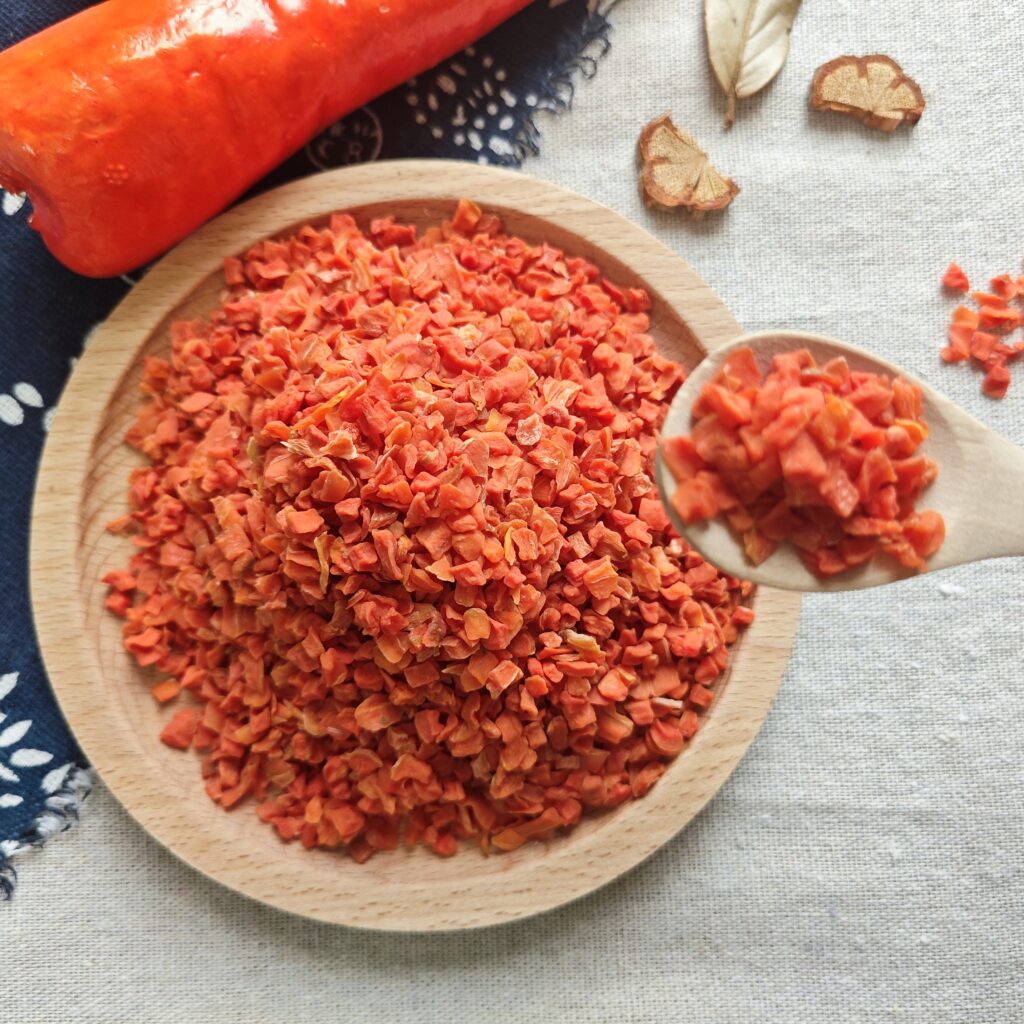
The table below shows the standard technical profile of the dehydrated carrot granules we supply. These figures match what we list on our product page and what appears on every Certificate of Analysis we issue.
Parameter | Specification |
Product Name | 탈수 당근 과립 |
Botanical Name | Daucus carota L. |
Processing Type | Air Dried (AD) |
Appearance | Bright orange, uniform, free-flowing granules |
Available Mesh Sizes | 8–16 / 16–26 / 26–40 / 40–80 mesh (custom on request) |
Moisture | ≤ 8.0% |
Total Ash | ≤ 6.0% |
Impurities | ≤ 0.1% |
SO₂ (Sulfur Dioxide) | Not detected — sulfur-free processing |
Rehydration Ratio | 1 : 6 to 1 : 8 |
GMO Status | Non-GMO |
Additives | None |
Shelf Life | 24 months (sealed, room temperature) |
Grade | Food Grade / Premium Grade |
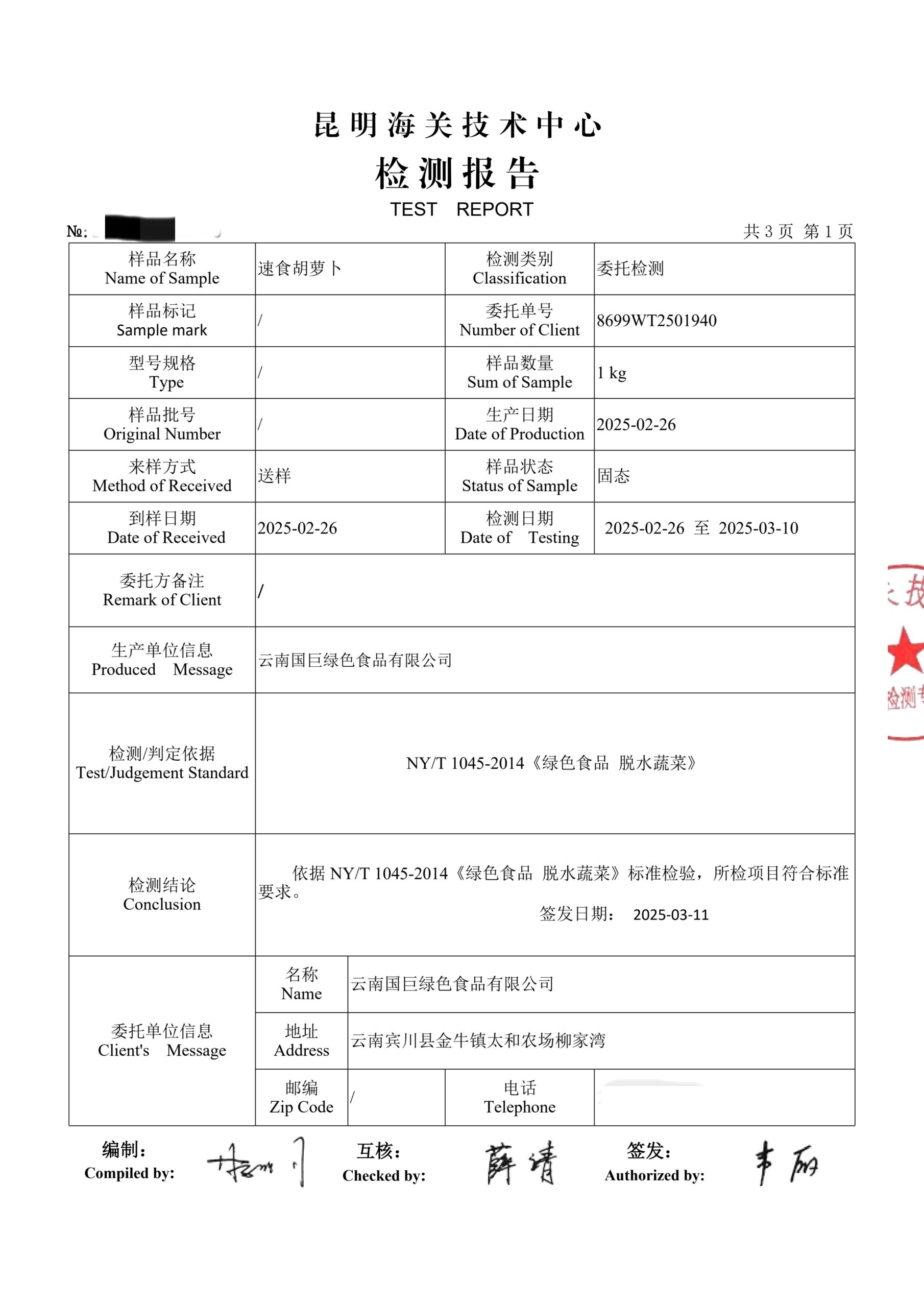
Pro tip: When you receive samples, request a recent third-party microbiological test report rather than the supplier’s in-house COA only. Reputable factories will already have lab reports from accredited Chinese institutions such as SGS or CTI on file. If a supplier hesitates to share these, treat that as a meaningful signal.
3. Choosing the Right Mesh Size for Your Application
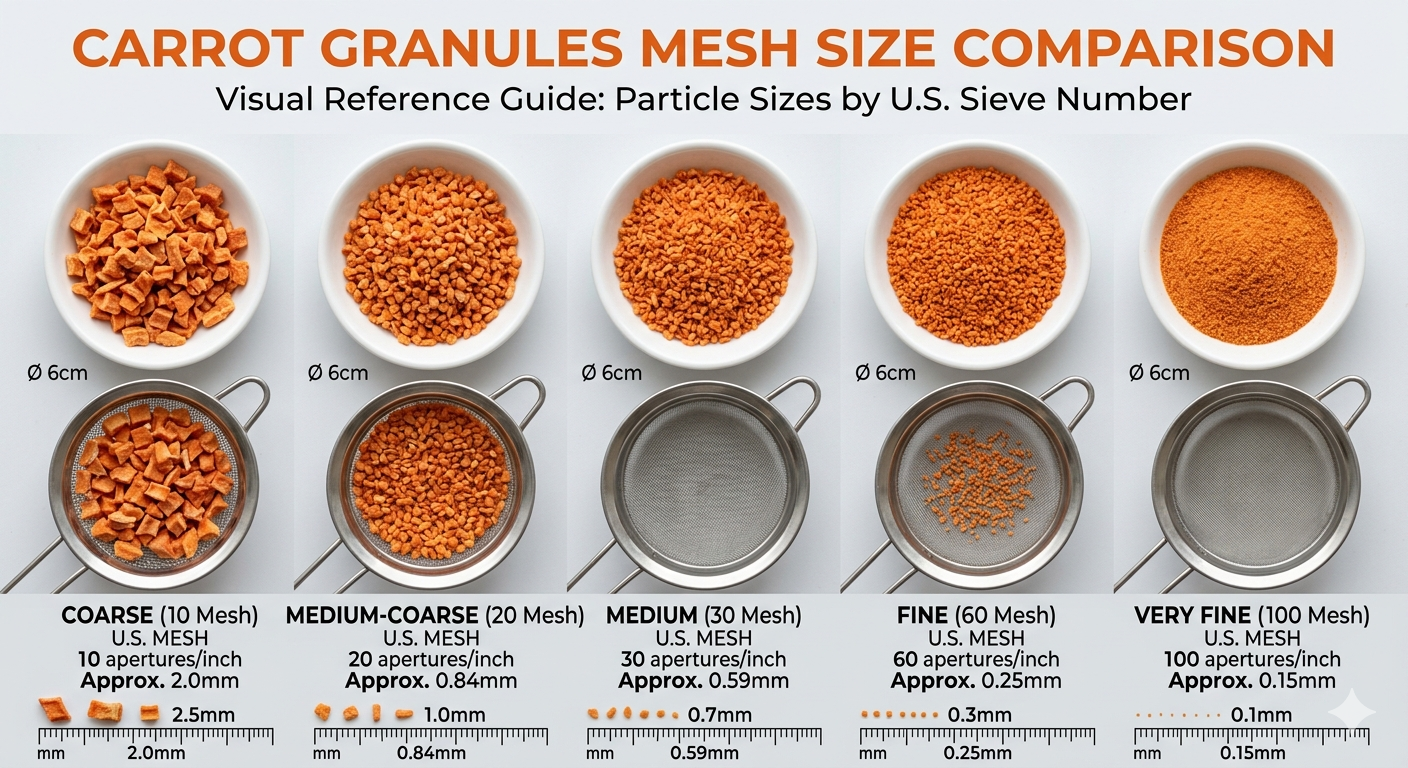
Mesh size is the single most common reason a buyer requests re-samples. Picking the wrong granule size can lead to settling in soup-base powders, uneven rehydration in instant noodles, or visually mismatched product photography. The following guide reflects how we map mesh sizes to typical end applications.
- 8–16 mesh (coarse): Hearty soups, stews, retorted ready-meals where visible carrot pieces are desirable after rehydration.
- 16–26 mesh (medium): Commercial seasoning blends, dry soup mixes, and dehydrated meal kits. This is the most-ordered range across our customer base.
- 26–40 mesh (fine): Instant noodle vegetable sachets, where rapid rehydration in under three minutes is critical.
- 40–80 mesh (ultra-fine): Ready-meal seasoning bases, sauce premixes, and applications requiring even color distribution rather than visible particles.
If you are unsure which mesh range fits your formulation, our standard recommendation is to request a multi-mesh sample set so your R&D team can run rehydration trials against your existing supply. We provide these comparison samples at no charge for qualified industrial buyers.
4. Quality Control and Microbiological Standards
Buyers serving regulated markets — particularly the EU, Japan, and the Gulf states — require carrot granules that meet strict microbiological limits. Our standard release specification is shown below, and we test every batch before shipment. Buyers requesting tighter limits (for example, total plate count ≤ 50,000 cfu/g for infant-food applications) can specify these requirements at the contract stage.
Microbiological Item | Release Standard |
Total Plate Count | ≤ 100,000 cfu/g |
Yeast & Mold | ≤ 1,000 cfu/g |
E. coli | Negative |
Salmonella | Negative / 25 g |
Heavy Metals (Pb, As, Cd) | Compliant with EU 2023/915 / GB 2762 |
Pesticide Residues | Tested against EU MRL / Japan Positive List |
💡 Important note: Sulfur dioxide (SO₂) is one of the most under-discussed risks when sourcing dried carrot products. Some lower-cost factories use sulfite dipping to brighten color and extend shelf life. This compromises labeling claims in the EU and creates problems for Japanese buyers, where sulfite tolerance is very low. Our partner factory uses heat-air dehydration without sulfite treatment — SO₂ is not detected in standard laboratory testing.
5. Packaging, MOQ, and Shipping Terms
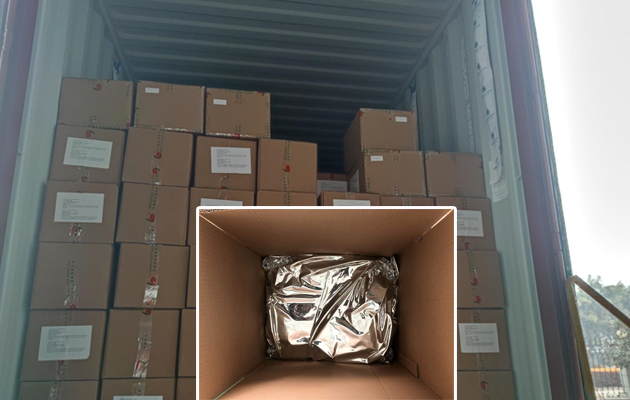
How dehydrated carrot granules are packaged matters more than buyers often realize. Aluminum-foil lined PE bags inside kraft cartons protect against moisture pickup during ocean transit, especially when cargo passes through humid trans-shipment ports. The standard load and packaging structure we use is below.
Logistics Parameter | Standard Specification |
Inner Packaging | Food-grade PE bag / aluminum-foil-lined bag |
Outer Packaging | Kraft paper carton |
Net Weight per Carton | 10 kg or 20 kg (per customer preference) |
20′ GP Container Load | 5 – 7 metric tons |
40′ HQ Container Load | 10 – 14 metric tons |
MOQ | 1 metric ton (smaller trial orders considered for new buyers) |
Production Lead Time | 15 – 25 days after deposit |
Shipping Terms | FOB Xiamen / Qingdao, CIF or DAP available |
Documents Included | COA, Certificate of Origin, HACCP, ISO 22000, Health Certificate |
Payment Terms | 30% T/T deposit, balance against B/L copy (other terms negotiable) |
All exports are handled by Xiamen Huafengke Trading Co., Ltd., which holds the export license for GuoJu Foods and manages container booking, documentation, and customs clearance from origin. Buyers receive a single point of contact from quote through to bill of lading.
6. Why Work with GuoJu Foods Specifically
There are many dehydrated carrot suppliers in China. What distinguishes GuoJu Foods is honesty about our supply structure, paired with the verification systems we apply to every partner factory we work with.
- Honest positioning: We don’t claim to manufacture carrot granules in our own facility. We self-produce green onion and scallion products in Yunnan, and source other categories — including carrots — through audited partner factories. This honest split protects buyers from the “fake factory” risk that has caused problems for many importers sourcing from China.
- Partner factory verification: Every partner factory we work with has been physically audited by our team. We hold copies of their HACCP and ISO 22000 certificates, and we visit production lines during peak season to verify hygiene and processing methods.
- Centralized export operations: Buyers deal with one entity — Xiamen Huafengke Trading — for documentation, payments, and logistics. This avoids the coordination problem of placing direct orders with multiple Chinese factories.
- Multi-product sourcing under one PO: Buyers who need carrot granules plus green onion, garlic, or other dehydrated vegetables can consolidate into a single container, with one set of documents.
7. How to Place a Sample Request or Order
Our standard workflow for new buyers is designed to minimize delays. Most qualified industrial buyers receive samples within 7–10 days of initial contact.
Step | What Happens | Typical Timing |
1. Inquiry | Buyer sends mesh requirements, target volume, destination port | Day 0 |
2. Quotation | We respond with FOB/CIF pricing, full spec sheet, and sample COA | Within 24 hours |
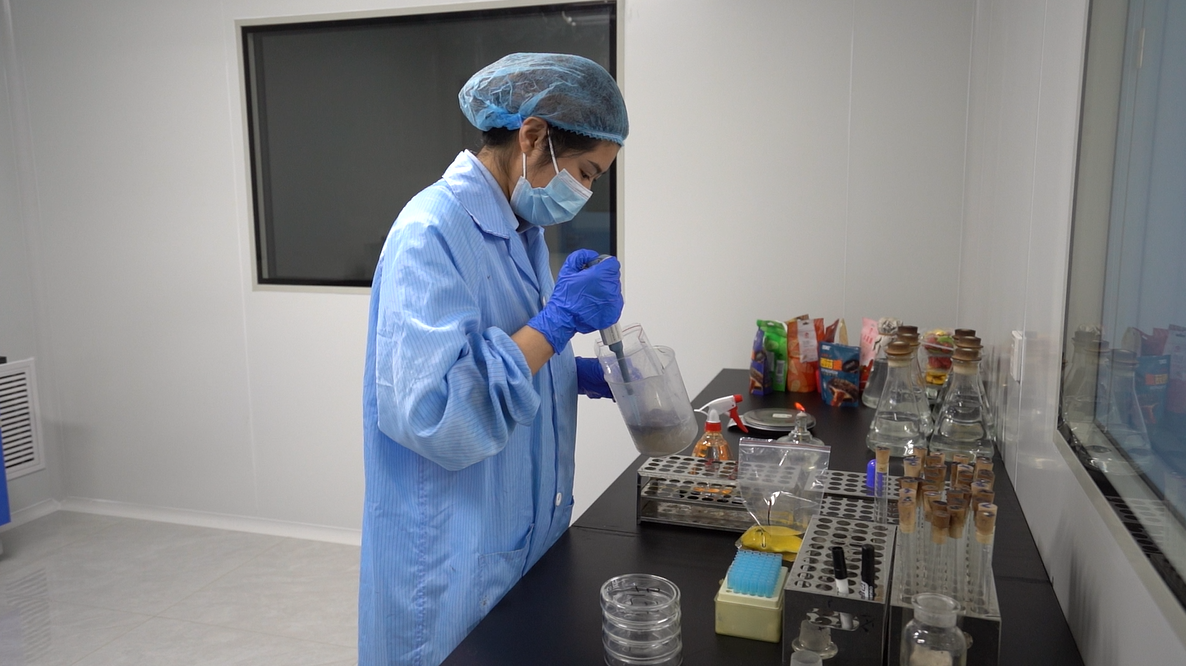
3. Sample | 200–500 g free samples shipped via DHL/FedEx (freight collect or prepaid by buyer) | Day 3–10 |
4. Lab Evaluation | Buyer’s QC team runs rehydration and microbiological tests | Buyer-dependent |
5. Contract & PI | We issue Proforma Invoice; 30% deposit confirms production slot | Day 1–3 after sample approval |
6. Production & QC | Partner factory produces; we conduct pre-shipment inspection | 15–25 days |
7. Shipment | Documents prepared by Xiamen Huafengke; B/L released after balance payment | Day 3–5 after production |
8. Frequently Asked Questions
Q: Are GuoJu Foods’ dehydrated carrot granules sulfur-free?
A: Yes. Our partner factory uses heat-air dehydration without any sulfite treatment. Sulfur dioxide is not detected under standard laboratory testing, which makes the product compliant with EU and Japanese labeling and import requirements.
Q: What is the MOQ for dehydrated carrot granules?
A: Our standard MOQ is 1 metric ton. We can accommodate smaller trial orders (250–500 kg) for new buyers running production trials, although per-unit pricing is higher at trial volumes.
Q: Can you provide private label or OEM packaging?
A: Yes. We support OEM packaging in 10 kg and 20 kg cartons with your brand label, batch coding, and specified net weight. Custom retail packaging is also possible from order quantities of 5 metric tons.
Q: Do you self-produce carrot granules, or do you source them?
A: We source dehydrated carrot granules from our verified partner factories in Shandong and Henan provinces, which are China’s two main dehydrated-carrot production regions. We self-produce green onion and scallion products in our own Yunnan facility. We disclose this supply structure openly because we believe it builds longer-term buyer trust.
Q: What is the rehydration ratio I should expect?
A: Our dehydrated carrot granules rehydrate at approximately 1:6 to 1:8 by weight. Soaking in warm water (40–60°C) for 5–10 minutes typically delivers optimal texture and color. Exact ratio depends on mesh size and your end-application processing conditions.
Q: How long does ocean shipping take to my destination?
A: Transit times from Xiamen or Qingdao port: Southeast Asia 7–14 days; Middle East 18–25 days; Europe (Rotterdam/Hamburg) 28–35 days; US West Coast 14–20 days; US East Coast 28–35 days. We coordinate with reputable freight forwarders and can quote CIF or DAP if you prefer door-to-door delivery.
9. Request a Free Sample or Custom Quotation
If you’re evaluating dehydrated carrot granule suppliers for your 2026 procurement plan, we’d be glad to send you a free sample set covering all four mesh ranges. Most evaluation requests receive a full quotation within 24 hours.
👉 Request Free Samples: WhatsApp +86 153 0501 6017 or email sales@guojufoods.com
👉 Get a Custom FOB/CIF Quote: specify mesh size, quantity, and destination port; we respond within one business day.
GuoJu Foods supplies dehydrated carrot granules and 30+ other dehydrated vegetable products to importers, food manufacturers, and distributors in over 20 countries. We look forward to discussing your sourcing requirements.