
Green Onion Quality and Storage Control
Dehydrated Green Onion Color: Why It Fades and How Buyers Should Control It
Green color is one of the first features buyers notice in dehydrated scallion. However, a photograph marked “bright green” is not a workable quality standard. Raw-material balance, processing, light, oxygen, moisture, temperature and storage time can all change how the product looks.
This guide explains how food manufacturers and importers can define dehydrated green onion color, compare samples fairly and investigate fading or darkening without confusing natural variation with a quality defect.
Request Color SamplesSend Quality Requirement
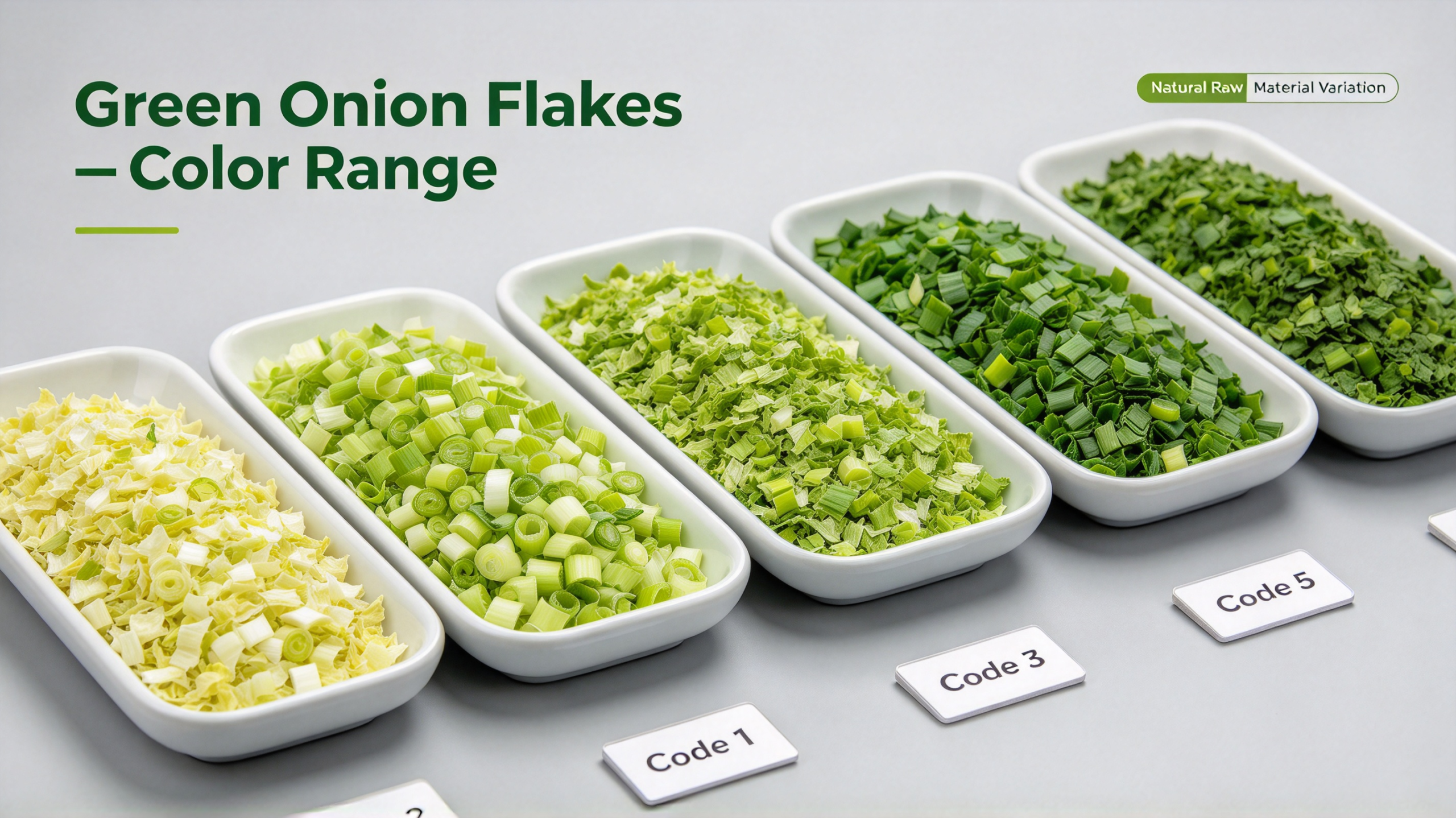
Color Variation Does Not Always Mean Color Deterioration
A commercial batch can contain dark green leaf pieces, lighter green tissue and pale stem material. The visual result changes with the green-to-white ratio, cut direction, particle size, raw-material maturity and the part of the plant included. Two acceptable batches may therefore look different even when neither has faded during storage.
Color deterioration is a different question. It can appear as a general loss of green intensity, olive or brown tones, unusually yellow pieces, patchy darkening or a change that becomes more obvious after storage. Buyers need a reference that distinguishes expected raw-material variation from a directional change over time.
Six Factors That Change Dehydrated Green Onion Color
On mobile, scroll the table horizontally.
| Factor | How it can affect appearance | What the buyer should check | Evidence to request |
|---|---|---|---|
| Raw material | Leaf maturity, variety, field condition and green-to-white ratio influence the starting color. | Whether the sample and order use the same product definition and plant-part balance. | Approved reference sample and representative batch photos. |
| Preparation and drying | Cutting, holding time, pretreatment and heat exposure can change chlorophyll and browning reactions. | Whether the actual process and cut are the same as the approved sample. | Process-flow confirmation and production lot record where available. |
| Light | Continued exposure can accelerate pigment loss and make green pieces appear duller. | Whether the inner package and outer carton limit light during storage and display. | Packaging structure and warehouse practice. |
| Oxygen | Oxygen can support oxidative changes during prolonged storage. | Seal integrity, headspace, package barrier and repeated opening. | Seal check, package specification and retained sample. |
| Moisture | Moisture pickup can accelerate quality changes and may also affect aroma, flow and microbial stability. | Humidity exposure, liner closure, punctures and time left open before repacking. | Moisture-related test result, storage record and pack inspection. |
| Temperature and time | Higher or fluctuating temperatures can accelerate chemical and pigment changes. | Production date, transit route, storage duration and actual warehouse conditions. | Lot history, arrival date and temperature records when justified. |
Processing Sets the Starting Color
The finished color begins with the incoming green onion. Leaf-to-stem balance, harvest condition and the time between preparation and drying all affect the visual baseline. The drying process then needs to remove water while controlling unnecessary heat exposure and browning.
Pretreatment may be used in some dried-vegetable processes, but buyers should not assume that every factory uses the same method. Ask for the actual ingredient declaration and processing flow for the offered product. Any additive or processing-aid question should be reviewed against the destination market and the final label.
When investigating a color difference, first determine whether the change was already present after production or appeared later during transport and storage. A retained production sample is valuable because it separates these two possibilities.
Light, Oxygen, Moisture and Heat Continue Acting After Drying
Light Exposure
Clear sample bags displayed near windows can change differently from material stored inside closed cartons. Compare samples only after recording how each one was stored.
Oxygen and Seal Condition
A package specification matters only when the liner is properly sealed and remains undamaged. Inspect seams, punctures and repeated opening during warehouse use.
Humidity and Moisture Pickup
Dried vegetables can gain moisture from humid air. Open-time during sampling or repacking should be controlled, especially in humid environments.
Temperature and Storage Time
A statement such as “room temperature” is too vague for an investigation. Record the actual warehouse range, duration and any periods near heat or direct sunlight.
Packaging should therefore be evaluated as a system: sealed food-contact liner, moisture and oxygen barrier, light protection, carton condition and warehouse practice. A printed outer carton cannot compensate for a poorly closed inner bag.
How to Build a Practical Color Standard
- Define the product first. State the green onion form, cut, plant-part balance and whether powder or fines are included.
- Approve a representative physical sample. Do not use only a retouched photograph or a few hand-selected pieces.
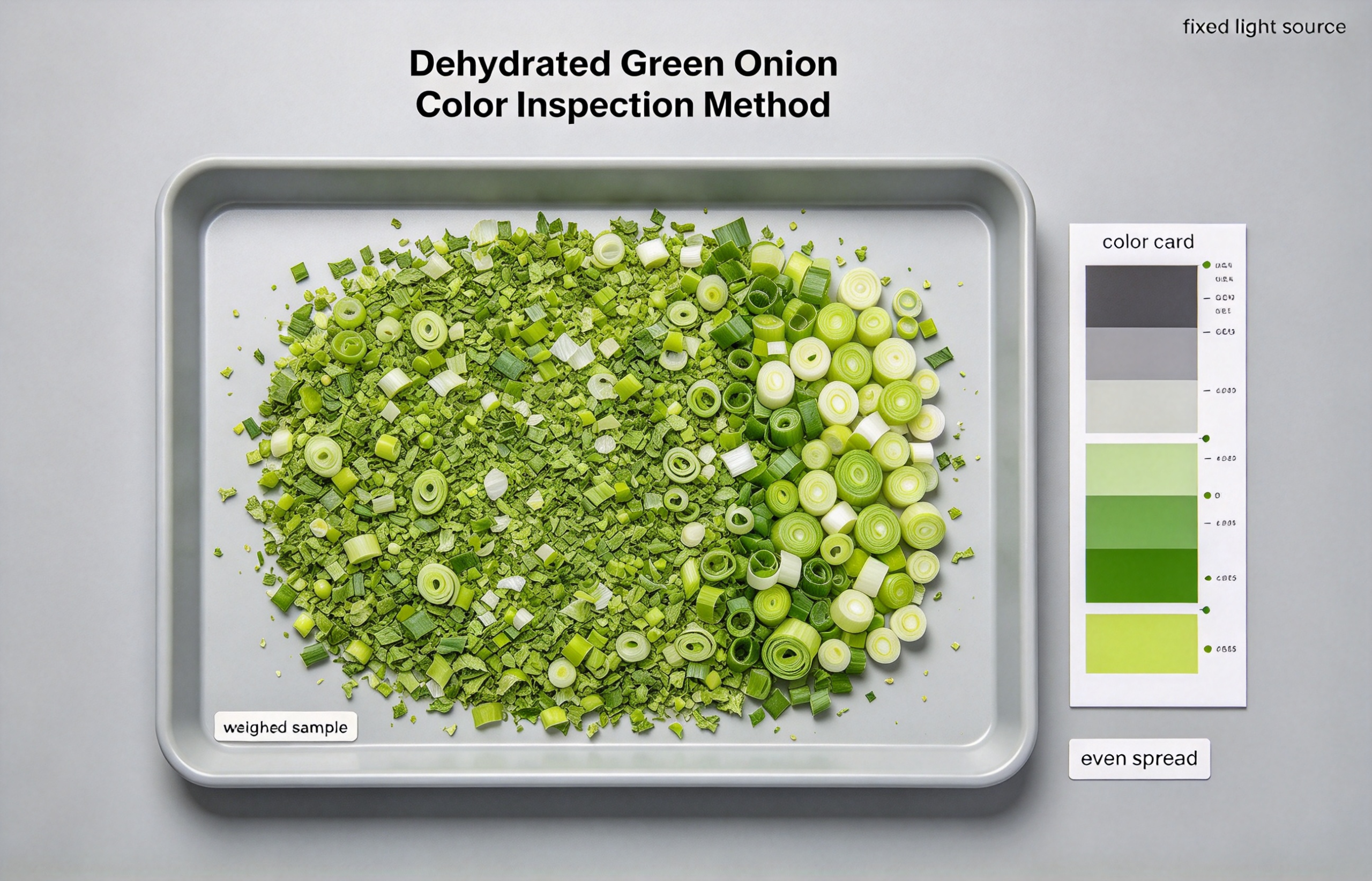
- Fix the comparison method. Use the same sample weight, tray depth, background, lighting and camera distance.
- Describe the acceptable range. Record normal green, pale and darker pieces as well as clearly rejected brown, yellow or unusual material.
- Add instrumental data only when useful. Color values can support communication when both parties agree on equipment, sample preparation and measurement method.
- Set a retained-sample procedure. Store sealed samples from approval and production under defined conditions and label them with lot and date information.
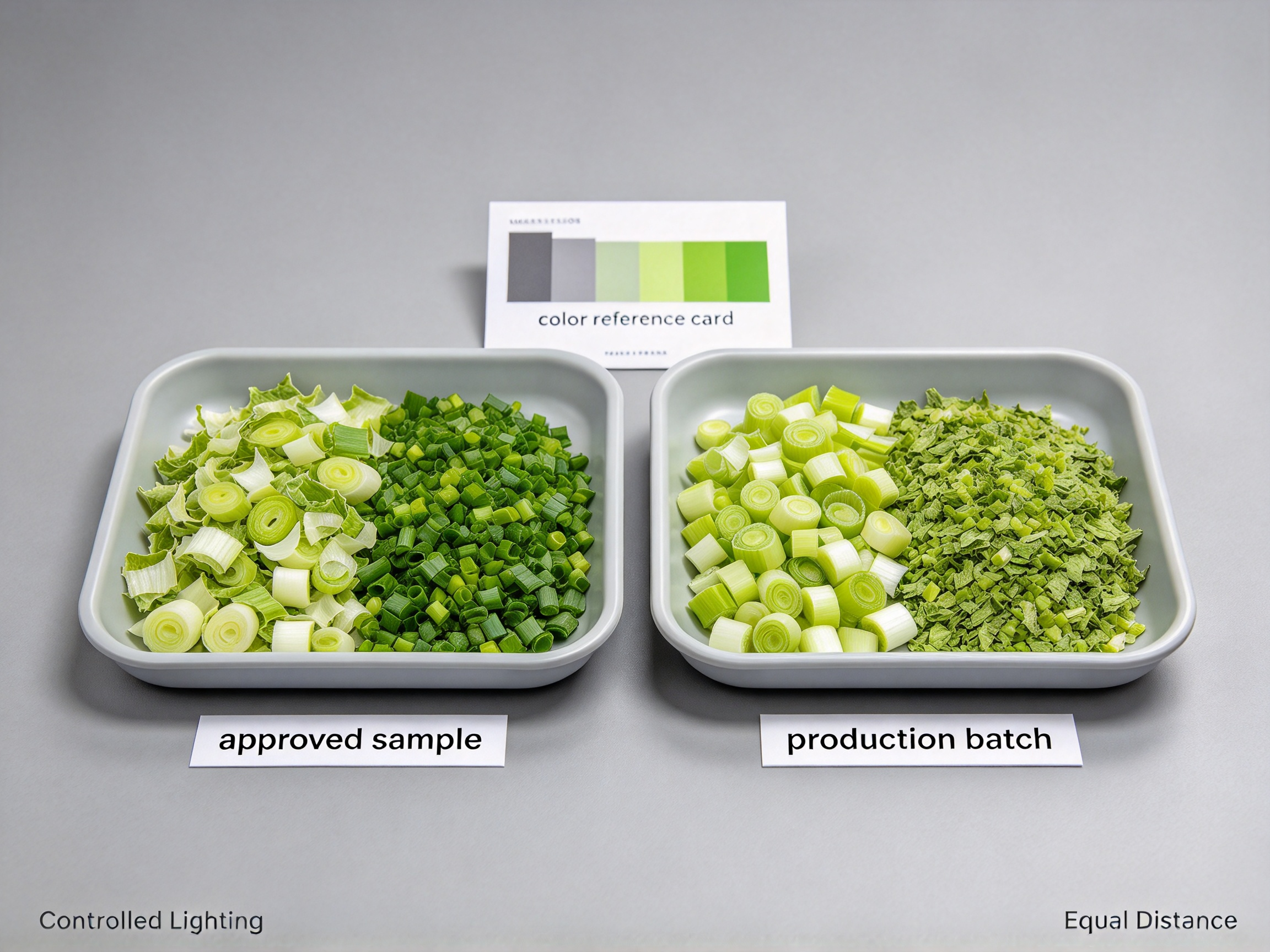
Color Photography Can Create False Disputes
Phone cameras automatically adjust white balance, exposure and color saturation. Warm warehouse lighting can make green onion look yellow, while cool lighting can make the same sample appear greener. A thick pile also looks darker than a thin, evenly spread sample.
For a useful comparison, photograph the approved sample and questioned batch together whenever possible. Use a neutral background, the same tray depth, indirect consistent lighting and an unedited original file. Include the lot code and date in a separate card rather than placing digital text over the product.
If the disagreement remains commercially important, compare physical samples or use an agreed instrumental method. Photographs are supporting evidence, not a complete specification.
Packaging and Storage Checks for Green Color Retention
| Control area | Questions for the supplier or warehouse | Risk if uncontrolled |
|---|---|---|
| Inner liner | What is the material structure, how is it closed and is it suitable for the intended storage period? | Moisture and oxygen exposure despite an intact outer carton. |
| Outer protection | Does the carton reduce light exposure and protect the liner from puncture or crushing? | Uneven light exposure, damaged liner and product breakage. |
| Warehouse | Is the area cool, dry, clean and away from sunlight, heat sources, walls with condensation and strong odors? | Accelerated fading, moisture pickup, odor transfer or carton damage. |
| Opened packs | How long does sampling or repacking take, and how is the remaining material resealed? | Local color change, caking, aroma loss and inconsistent final packs. |
| Stock rotation | Are lot dates visible and is first-in, first-out practice followed? | Older material may be compared unfairly with newly produced samples. |
Do not publish a universal storage temperature or shelf-life claim without product-specific factory data and validation. The specification should state the supplier’s confirmed conditions for the actual product and package.
How to Investigate Fading or Darkening After Arrival
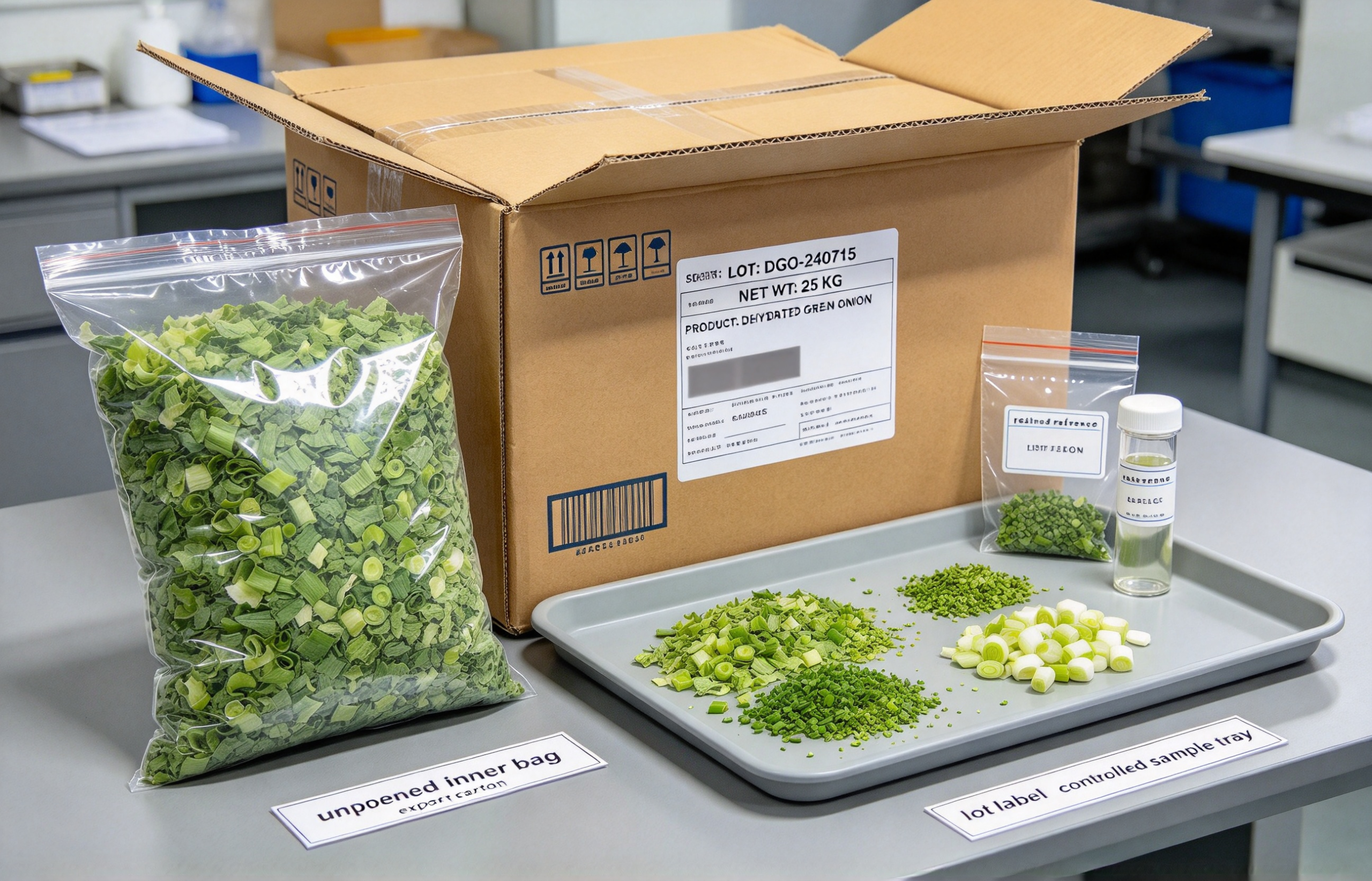
- Quarantine the questioned lot without opening every carton.
- Record the lot number, production date, arrival date, carton position and warehouse location.
- Photograph unopened packaging, seals, damage and representative product under controlled lighting.
- Compare the questioned material with an unopened arrival sample, supplier-retained sample and approved reference.
- Check for associated changes in aroma, moisture, texture, caking or foreign odor.
- Review transit, customs delay, warehouse temperature, humidity, sunlight and open-pack handling.
- Agree on any laboratory or instrumental comparison before testing so both parties use the same method.
What Buyers Should Include in a Color-Control Inquiry
Product Definition
- Required cut or form
- Green-to-white preference
- Application and visibility in the final food
- Reference sample or color expectation
Pack and Market
- Bulk or retail pack
- Target net weight
- Destination country
- Expected transit and warehouse route
Acceptance Method
- Visual reference procedure
- Instrumental test if required
- Sampling plan
- Rejected color conditions
Documents and Samples
- Specification and ingredient statement
- Relevant COA items
- Packaging structure
- Pre-shipment and retained sample request
Related GuojuFoods Resources
Review the dehydrated green onion product page for the main product inquiry, the dehydrated green onion sourcing guide for general supplier questions and the instant noodle seasoning guide for application-specific purchasing points. You can also browse all GuojuFoods products.
Dehydrated Green Onion Color FAQs
Why does dehydrated green onion become less green during storage?
Light, oxygen, moisture, temperature and storage time can contribute to pigment and quality changes. The investigation should also confirm whether the batch began with a different raw-material or green-to-white balance.
Does a darker green sample always mean better quality?
No. A darker appearance may come from leaf proportion, sample depth, lighting or camera settings. Quality approval should combine a representative color range with aroma, moisture, cleanliness, cut and application requirements.
Can buyers set one exact green color for every batch?
A narrow visual target may be unrealistic for an agricultural ingredient. Buyers can define an acceptable range, rejected conditions and a consistent comparison method while still controlling meaningful batch variation.
Should color be checked from photographs or physical samples?
Physical samples are stronger references. Controlled photographs help communication, but camera processing, lighting and sample depth can create misleading differences.
What packaging helps protect dehydrated green onion color?
The package should be evaluated for moisture, oxygen and light protection, seal integrity and compatibility with the intended storage route. The confirmed solution depends on the actual product, pack size and shelf-life study.
What should an importer do if one shipment looks faded?
Keep unopened cartons and samples, document the lot and storage history, compare retained references under controlled lighting and check for related moisture, aroma or packaging changes before deciding the cause.
Can GuojuFoods supply an approved color sample before an order?
Sample arrangements can be discussed after the buyer provides the product form, application, destination, packing requirement and color expectation. The approved reference and production acceptance method should then be recorded clearly.
Technical References
The storage principles in this guide are supported by FAO guidance on pigment deterioration and controllable storage factors, FAO guidance on packaging dried fruits and vegetables and peer-reviewed research on humidity, temperature and chlorophyll degradation in dried green material. Final acceptance limits should be validated for the actual green onion product and package.
Set a Clear Green Onion Color Standard
Send the required cut, application, preferred green-to-white balance, destination, packaging format and sample-approval method. GuojuFoods can use this information to organize a more relevant sample and quotation discussion.