
How Dehydrated Vegetables Are Processed: From Farm to Factory (Complete Guide)
For food manufacturers and ingredient buyers, product quality starts at the source. Therefore, understanding how dehydrated vegetables are processed helps you evaluate quality, safety, and supplier reliability.
In this guide, we explain the complete process from farm selection to final packaging in a clear and practical way.
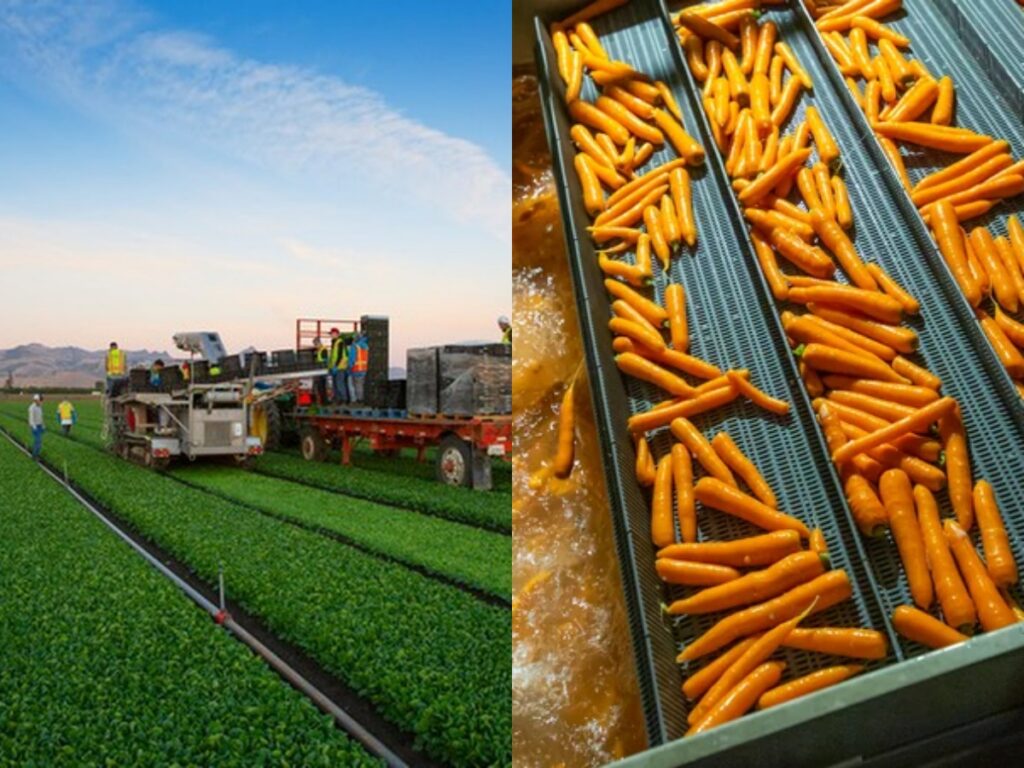
Raw Material Selection at the Farm Level
The process begins at the farm. Farmers harvest vegetables at peak maturity to ensure strong flavor and natural color.
At the same time, workers remove damaged or unsuitable vegetables. As a result, only clean and high-quality raw materials move forward.
Because raw materials directly affect the final product, this step is critical for consistent quality.
Cleaning and Sorting
After harvesting, vegetables enter the cleaning stage. First, water washing removes soil and surface impurities.
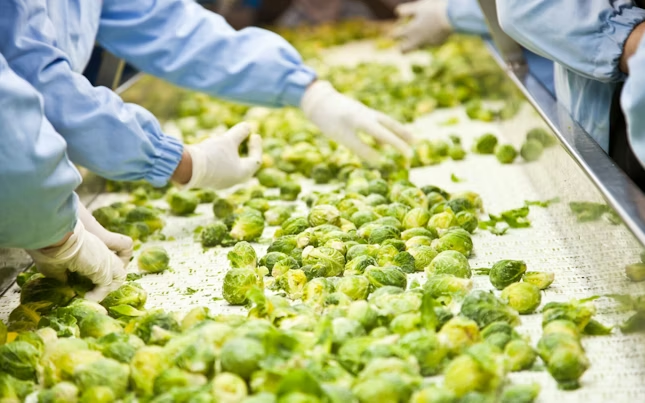
Next, sorting systems group vegetables by size and quality. In addition, manual inspection helps remove foreign materials.
As a result, this step improves food safety and ensures a consistent appearance.
Cutting and Size Preparation
After cleaning, factories cut vegetables according to product requirements.
For example, buyers may require slices, granules, flakes, or powder. Therefore, producers must control cutting size carefully.
Uniform cutting helps improve drying efficiency. At the same time, it ensures even moisture removal and stable rehydration performance.
Dehydration Process
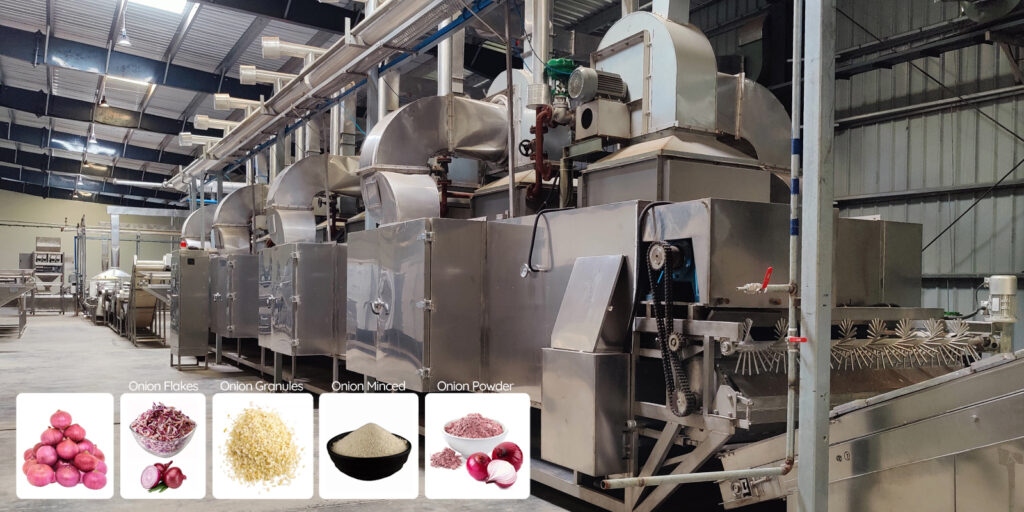
The dehydration stage is the most important part of the entire process. During this step, factories use heat and airflow to remove moisture.
At the same time, they control temperature carefully to protect natural flavor and color. As a result, the final product becomes stable and suitable for long-term storage.
Common dehydration methods include:
- Hot air drying
- Low-temperature drying
- Controlled moisture drying
Among these methods, hot air drying is the most widely used. This is because it offers a good balance between efficiency and product quality.
In addition, controlled drying ensures consistent results, which is essential for large-scale food production.
👉 Compare dehydrated vs fresh vegetables
Cooling and Moisture Stabilization
After dehydration, products enter a cooling phase. During this stage, controlled cooling prevents texture damage.
At the same time, technicians test moisture levels to meet specifications. As a result, products remain stable during storage and transport.
Quality Control and Inspection
Quality control runs through every stage of production. Before packaging, inspectors carefully test each batch.
Key checks include:
- Moisture content analysis
- Microbiological testing
- Metal detection
- Visual inspection
Because of these steps, buyers receive safe and consistent ingredients.
Packaging for Bulk Supply
Once approved, products move to packaging. Most buyers choose bulk packaging such as 10kg or 25kg cartons.
In addition, suppliers use food-grade inner bags to protect against moisture and contamination.
As a result, packaging supports safe storage and efficient transportation.
Storage and Global Distribution
Finished products are stored in clean and dry warehouses. Unlike fresh vegetables, dehydrated products do not require cold storage.
Therefore, logistics become simpler and more cost-effective. This advantage allows suppliers to serve global markets efficiently.
👉 Learn more about dehydrated vegetables
Why the Processing Method Matters
The production process directly affects product performance. For example, it impacts shelf life, consistency, and food safety.
In addition, processing quality determines rehydration performance. Therefore, buyers should understand the process before choosing a supplier.
Looking for a Reliable Dehydrated Vegetable Supplier?
At Yunnan Guoju Green Food Co., Ltd., we provide stable supply and strict quality control.
- Consistent product specifications
- Reliable production capacity
- Customized solutions
- Export documentation and COA
👉 Contact us for samples and quotations
Conclusion
Understanding how dehydrated vegetables are processed helps buyers make better sourcing decisions.
By working with experienced suppliers, businesses can ensure stable quality, reduce risks, and improve production efficiency.
FAQ
How are dehydrated vegetables processed?
Factories clean, cut, dry, cool, inspect, and package vegetables under controlled conditions.
What is the most common drying method?
Hot air drying is the most widely used method.
Why is processing important?
Because it directly affects quality, safety, and product consistency.